Situation
This project was part of a 5 weeks long hands-on class. This course was designed to teach us how to design experiences that use different types of interaction. The original assignment was to design a prototype that integrates a voice assistant, either through a physical object or as an Alexa skill or digital service.
The imposed brief was entitled "Intimate agents" and sought to answer the following questions:
How to learn about body conditions subject to taboos (such as Urinary Tract Infection Diseases) and their prevention, discovery & treatment ?
The team & tools we used
We were a team of 3 and roles were assigned based on our strongest skills: I was the project manager of this project. I was incharge of taking care of all the deadlines and keeping the team updated. I also took upon the role of the 3D CAD desiginer and protoyping. I was involved in every stage of the design process with the team. More concretely, I took responsibility for the following: user flow, app flow, analysis of the survey, creation of some insights, sketching, blueprints, renders, prototyping and testing.
Empathize
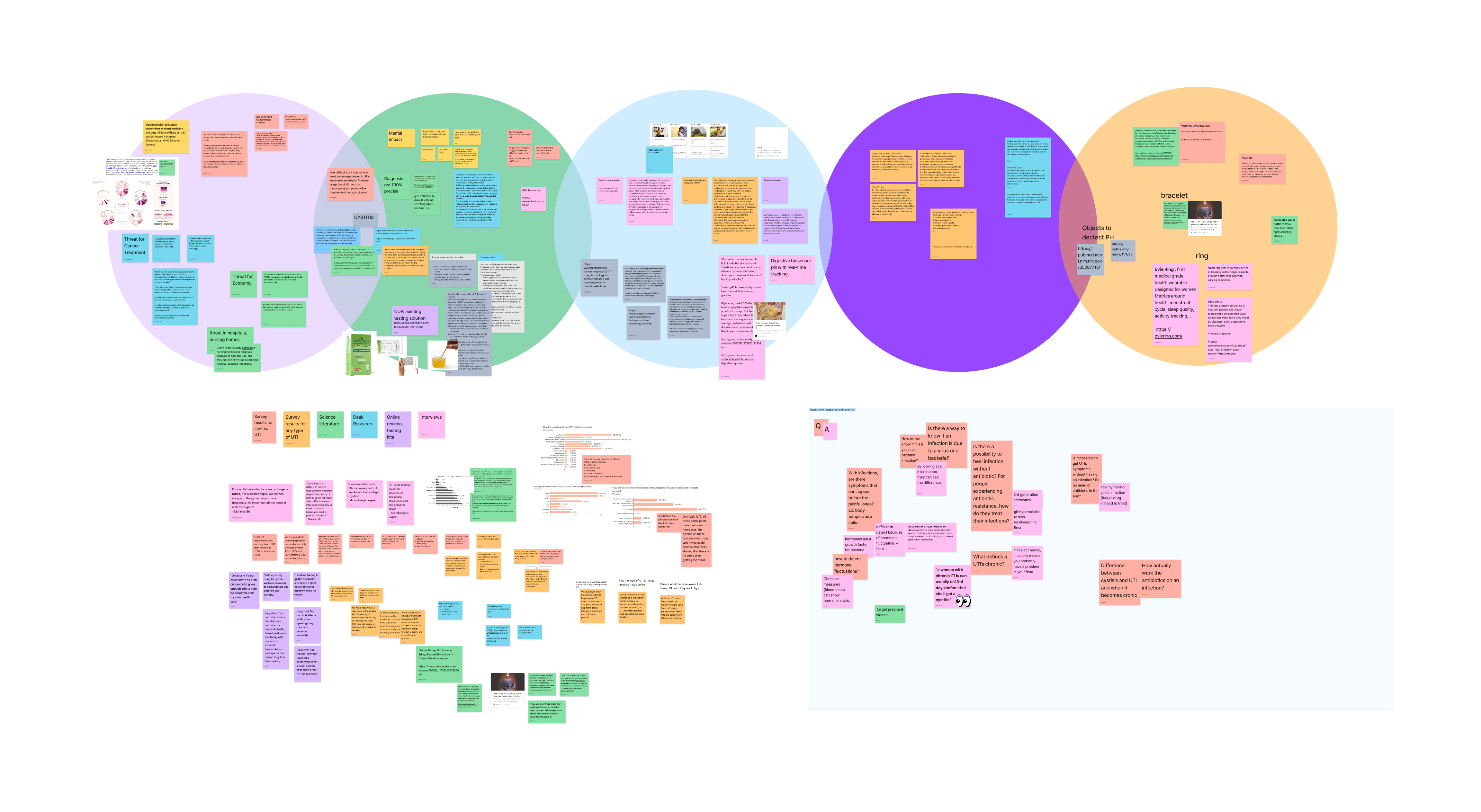
In this phase, we gathered knowledge and information through desk research, survey, informal interviews and we also looked for online reviews.
Desk Research
At the start of the project, the team received a brief on antibiotic resistance and urinary tract infections (UTIs) and began conducting desk research on both topics. However, as the research progressed, the team noticed a shared inclination towards focusing on chronic UTIs. Therefore, the team decided to shift its focus towards the topic of chronic UTIs for the project's development.
Here are the main findings relevant to our final solution :
- 50-60% of women and 12% of men will get a UTI at some point in their life.
- UTI can become serious : 25% of sepsis cases originate from the urogenital tract infections.
- 150 million people worldwide are affected by UTIs.
- UTIs can greatly impact women’s lives : time off work, poor quality of sleep, avoiding social and physical activities and impacting sex life
- Smart wearable could in the future detect infections : researchers have developed a smartwatch app designed to alert users when their bodies show signs of fighting an infection, such as elevated heart rate.
User research
Survey
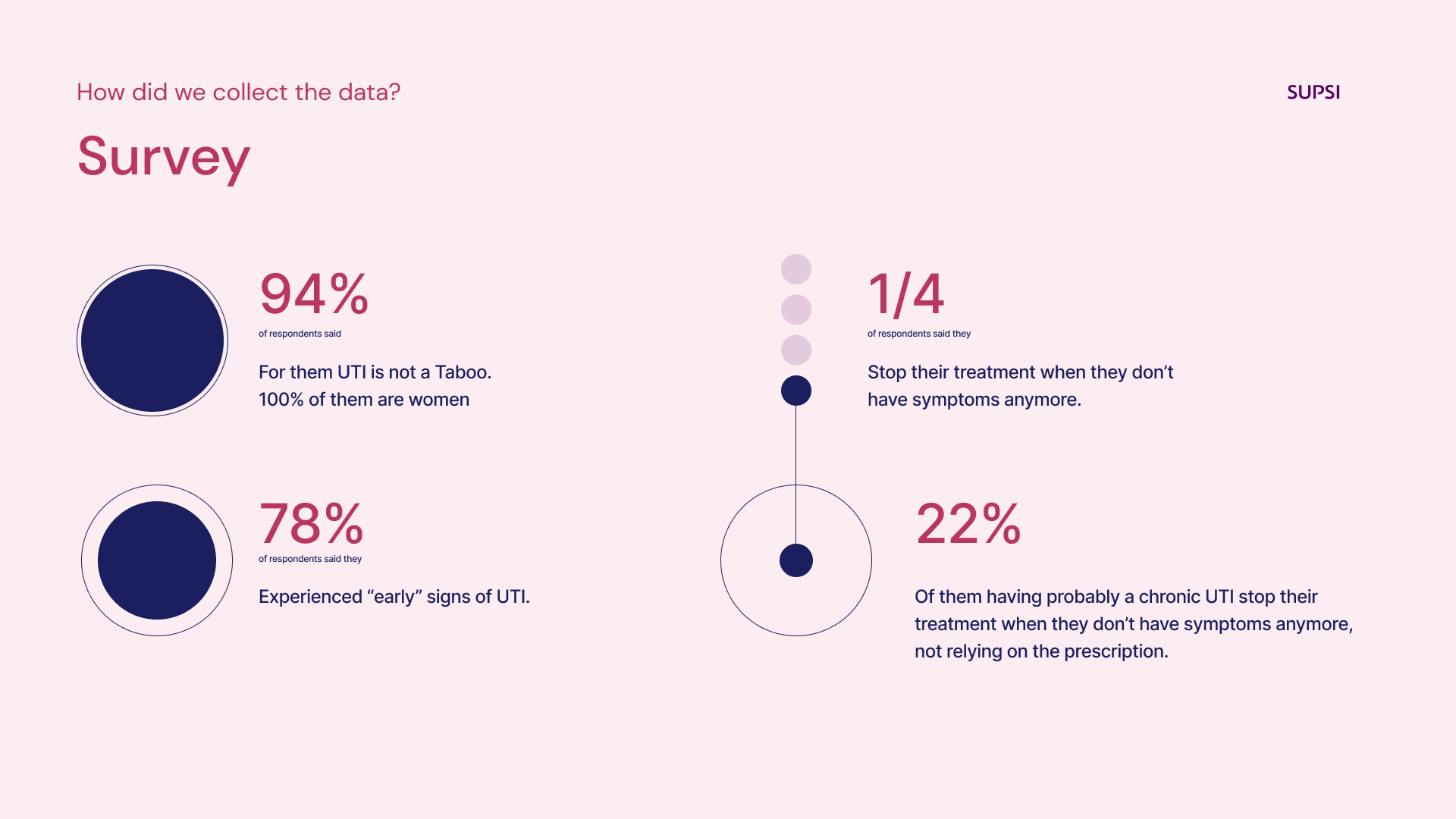
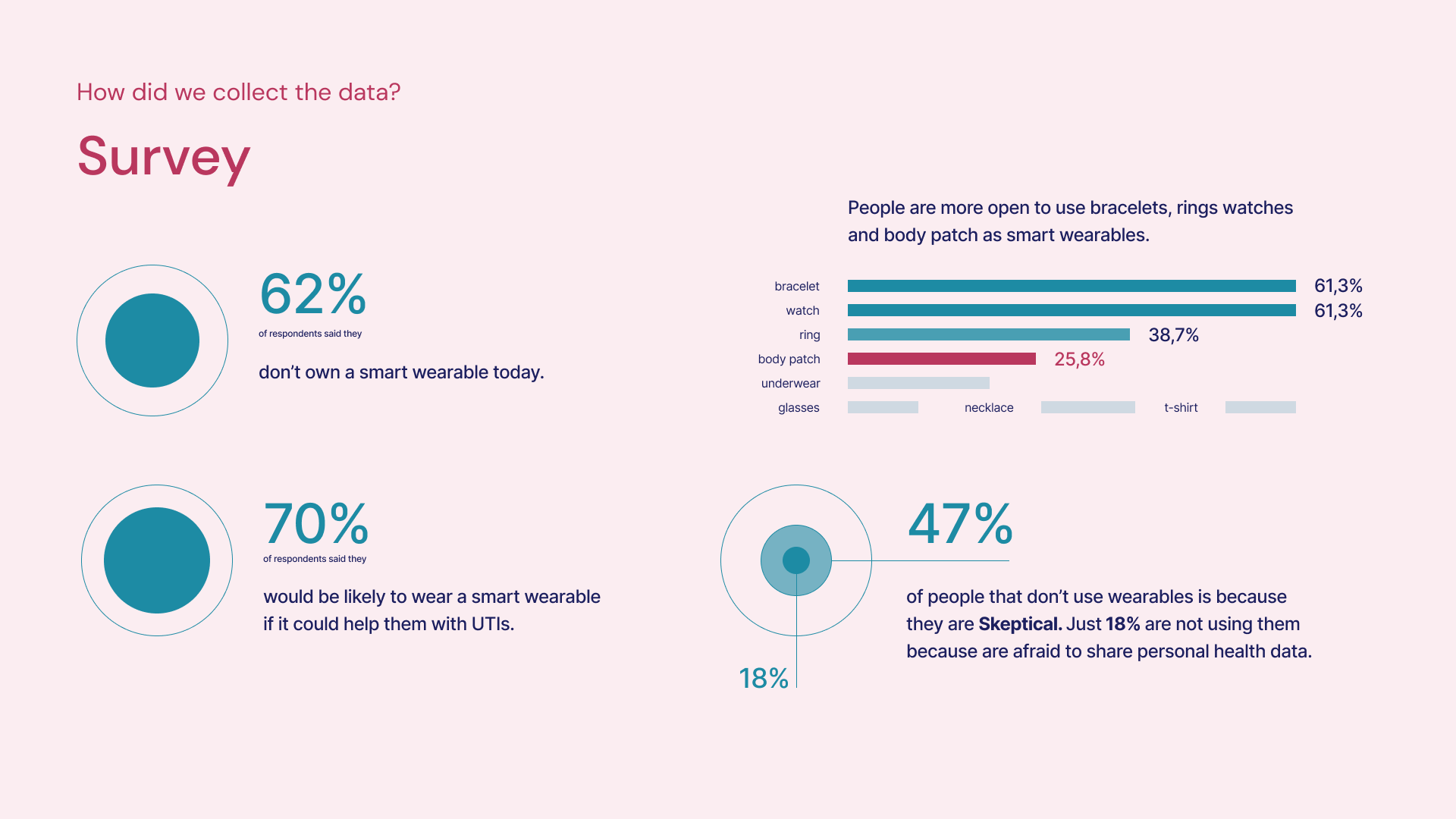
To gather insights and data, the team conducted a survey of 32 individuals who had experienced a UTI at least once in their lifetime. The survey was designed to cover various topics related to UTIs and smart wearables, and included both men and women. The team found that female participants did not view UTIs as a taboo topic, with 78% reporting early signs of UTI. However, 25% of participants reported stopping their UTI treatment once their symptoms disappeared, and 22% of those with chronic UTIs stopped their treatment before completing the prescribed course of medication. The team also discovered that 62% of respondents did not currently own a smart wearable device, but 70% indicated they would be willing to wear one if it could assist them with UTI-related issues. Skepticism was the primary reason cited by those who did not currently use wearables, while only a minority (18%) expressed concerns about sharing their personal health data.
Interviews
Additionally, the team conducted informal interviews with a microbiologist and two women who had experienced multiple UTIs. These interviews provided valuable insights that complemented the survey data and gave a more human perspective on the topic.
What we took away from our interviews was:
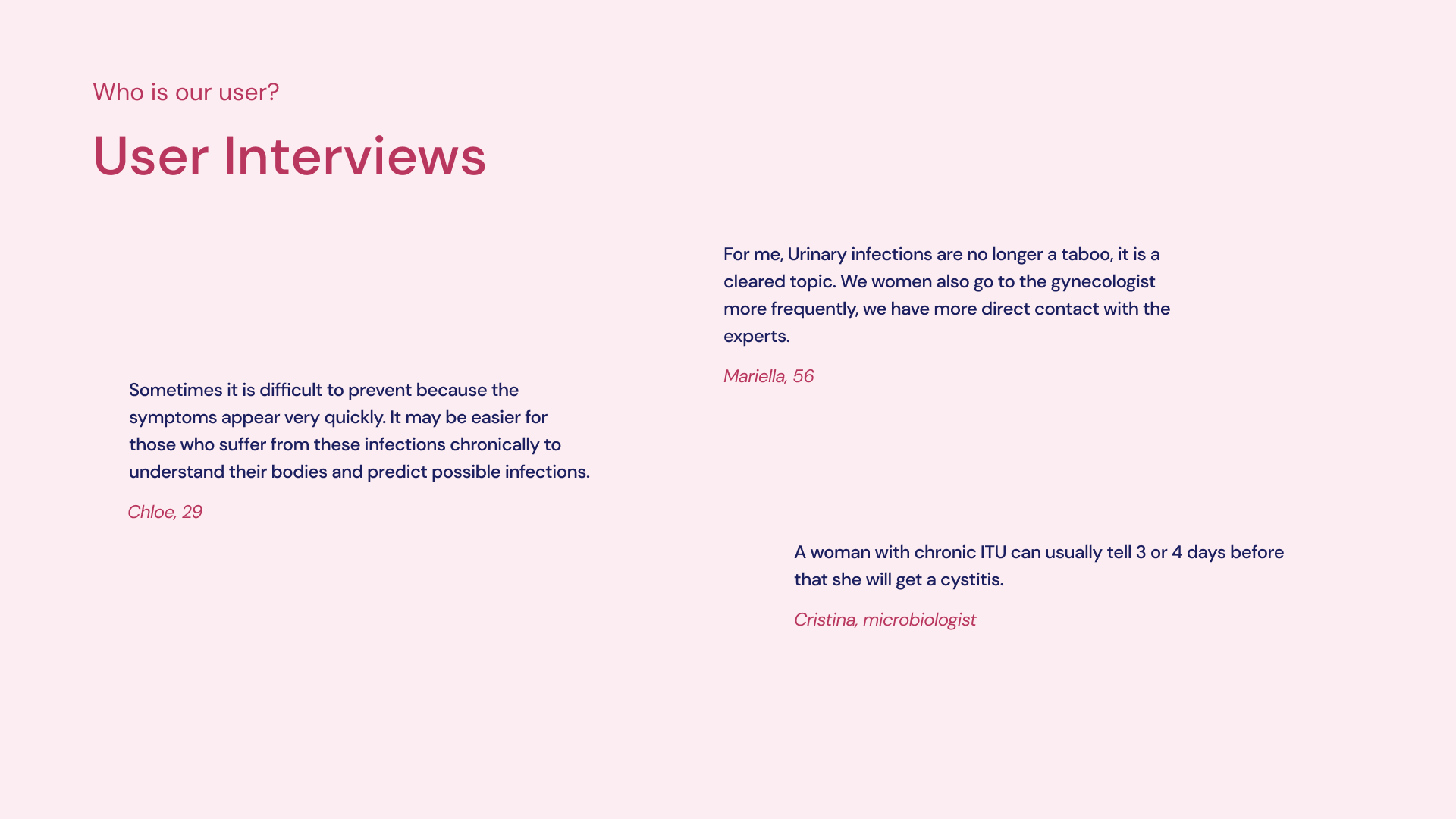
- “A woman with chronic ITUs can usually tell 3-4 days before that she’ll get a cystitis” - Microbiologist
- “For me, Urinary infections are no longer a taboo, it is a cleared topic. We women also go to the gynecologist more frequently, we have more direct contact with the experts.” - Mariella, 56
Amazon reviews
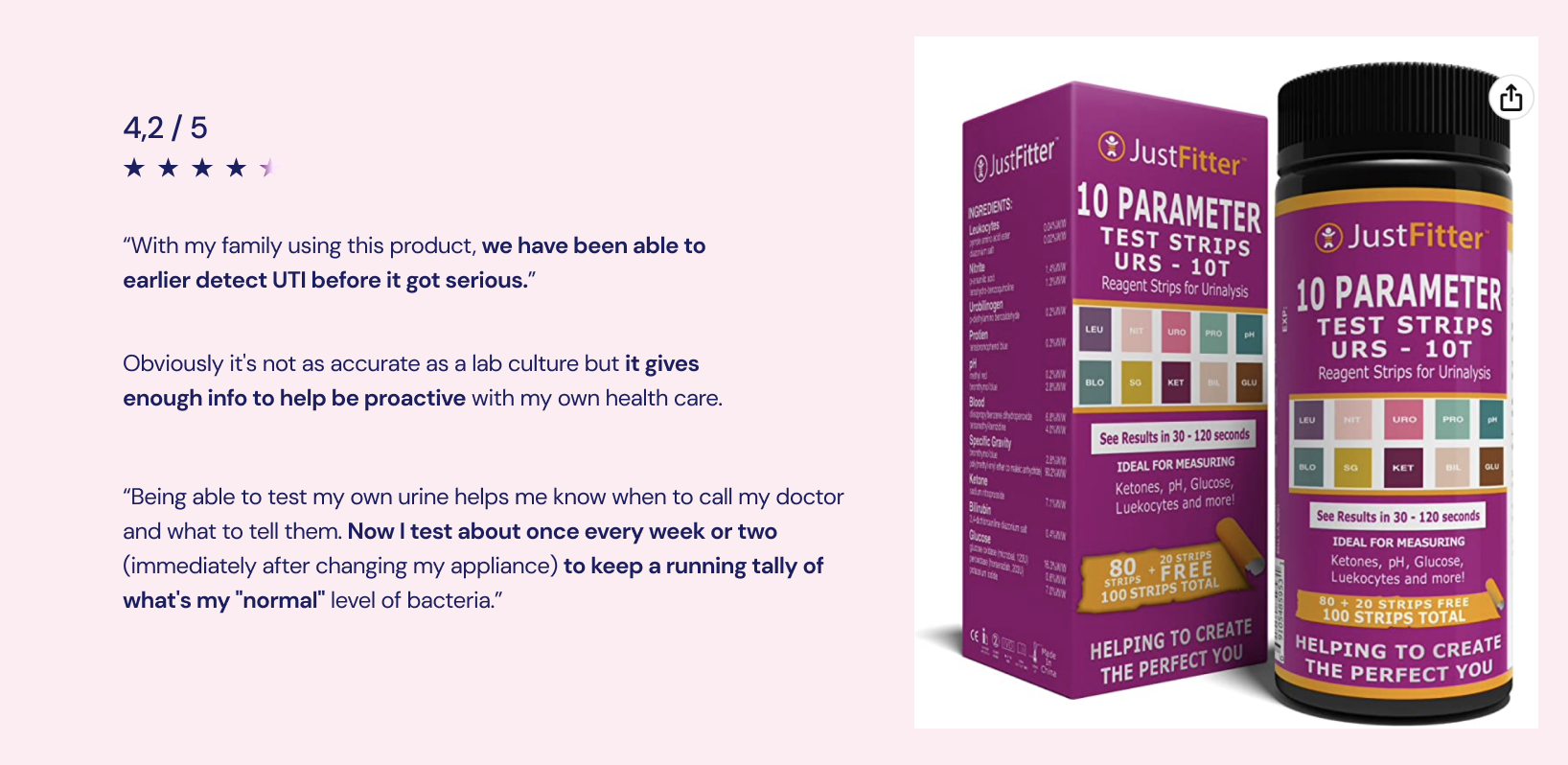
During our research we came across Amazon who sells these at-home testing kits. We asked in the survey if they knew about them, and for mostly their answer was no, so we decided to look into it. We found really good reviews about this product, so we decided to order it ourselves and try it.
Define
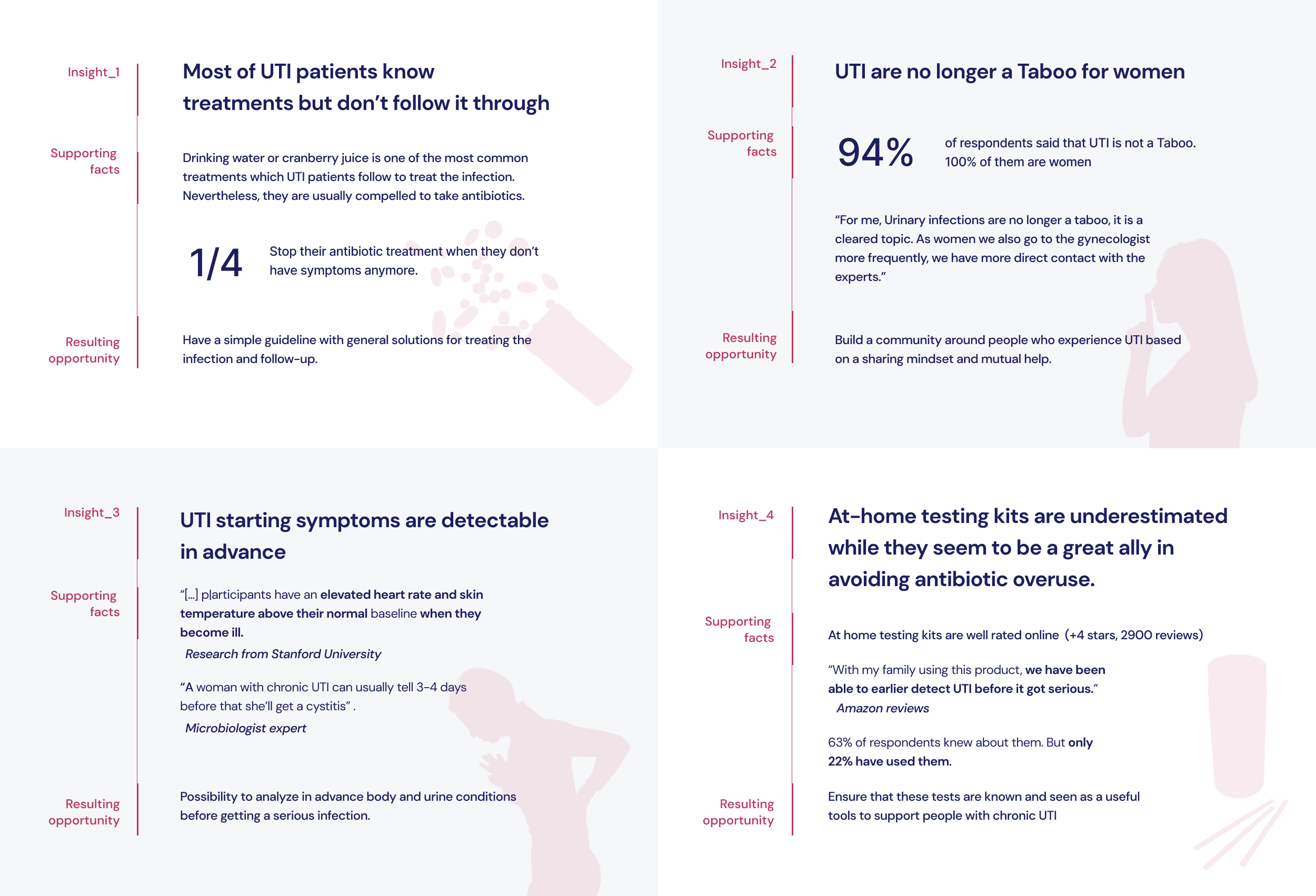
During the making-sense phase of the project, the team developed several key insights that helped identify pain points and opportunities for the UroCare product. These insights helped the team gain a deeper understanding of the issues surrounding UTIs and informed the direction of the project.
Insights
Together, these insights provided a solid foundation for defining the UroCare product's target user archetype and developing a user journey for the at-home testing kit.
Target
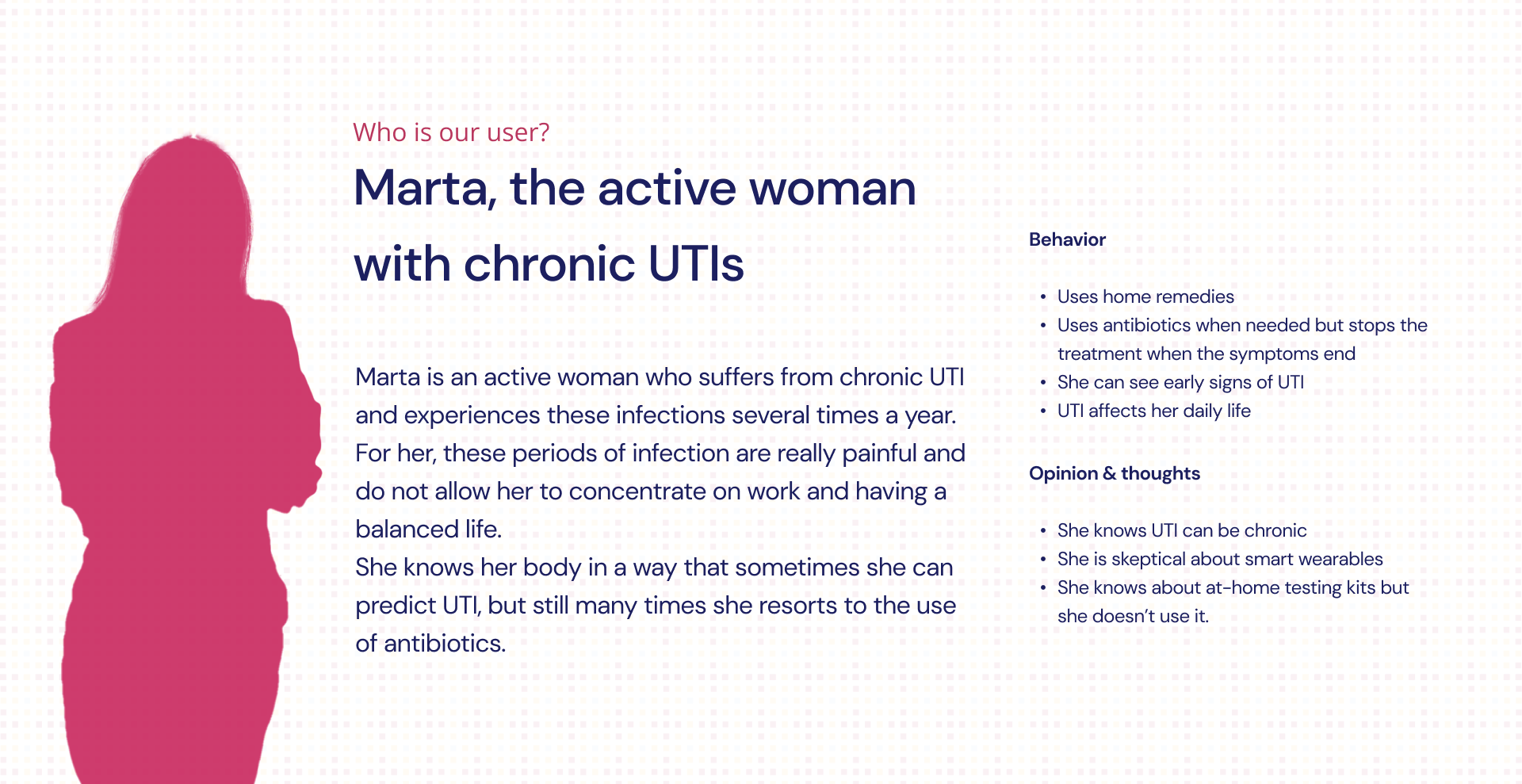
As we decided to target women living with chronic UTIs, we opted to make an archetype that is more general than a persona. Marta represents all active women, i.e. adult and not retired, who have chronic UTIs. Because of her condition, she knows the treatments and can feel an infection coming days in advance.
Customer Journey
Seeing how these at-home strip tests were appreciated online but not among our participants, we decided to focus our research on these strip tests to better understand how they are used and what might be their biggest pain points.
After purchasing an at-home self-testing kit to test it on ourselves and reading the reviews of these kits online, we created a user journey map of this process.
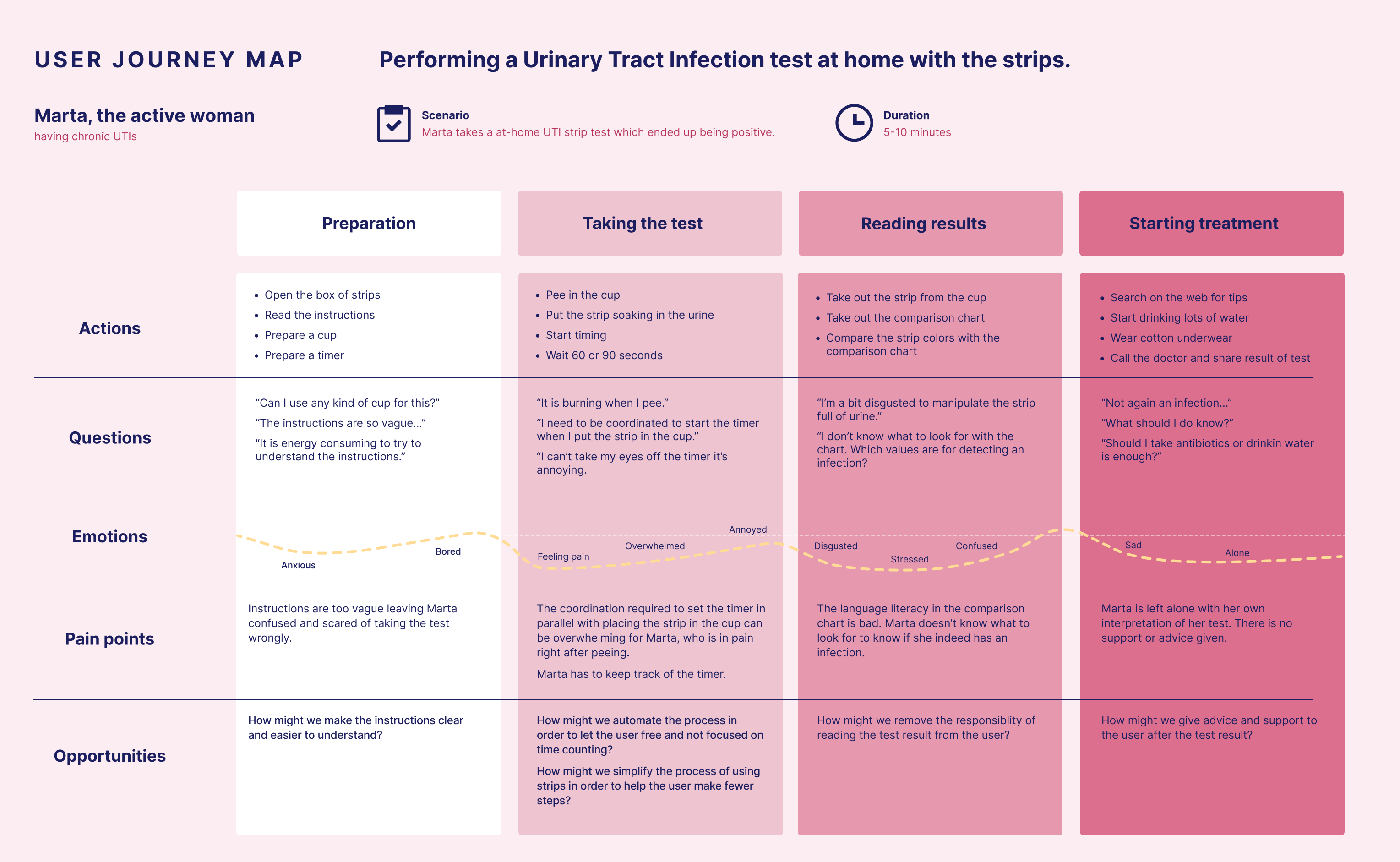
Here are the biggest pain points we found out with the opportunity they bring:
- The instructions for these tests are too short, and the illustrations are too vague and open to misinterpretation. Marta is thus a bit scared to fail the test and annoyed to actually read them.
- How might we make the instructions clean and easier to understand?
- As the strip needs to be soaked in urine for 60 seconds, Marta needs to prepare a timer and start it at the same time she soaks the strip. This double manipulation is a bit stressful and annoying.
- How might we simplify the process of using strips in order to help the user make fewer steps?
- The wait is boring Marta since it is so short she can’t take her eyes off the timer.
- How might we automate the process in order to let the user free and not focus on time counting?
- When it is time to read the result, this moment is stressful because the time window to read the test is only a few minutes. At that moment Marta has to take out the strip and the comparison chart that comes with the kit and compare the colors of the strip with the colors in the chart. It is confusing because the chart has many different colors and no explanation is given regarding these values. Unless being already educated on the topic, Marta doesn’t know which values are crucial to detect an infection.
- How might we remove the responsibility of reading the test result from the user?
- The other major pain point is after reading the result, there is no advice or recommendation given to her. She feels a bit left alone with her infection.
- How might we give advice and support to the user after the test result?
Problem definition
Starting with the opportunities we found with our insights, we did a “How Might We” session that ended up with two main HMW questions:
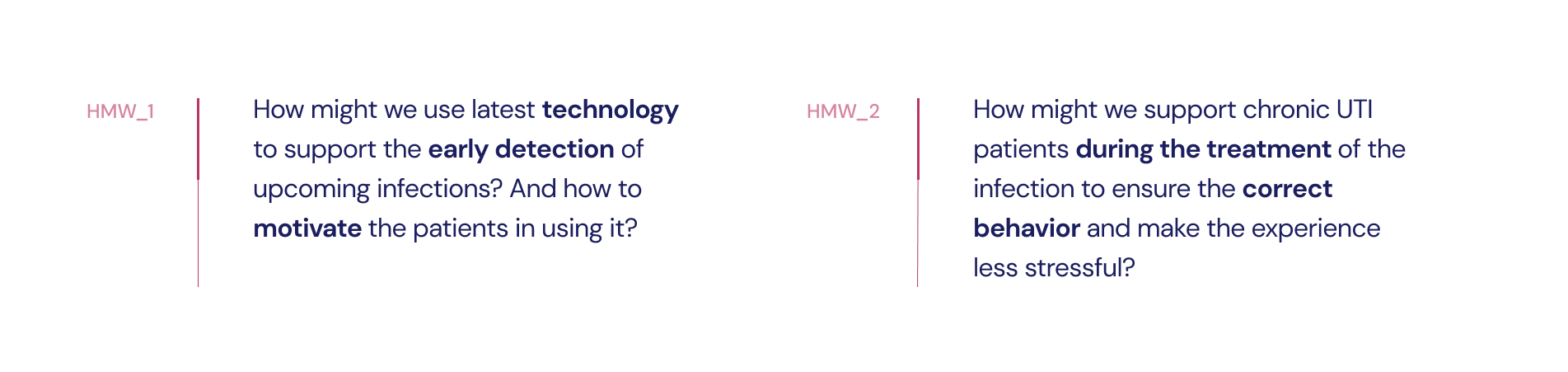
These HMW focus on the prevention of infections and the follow-up after detecting one.
With these questions in mind and after reading the positive online reviews of these UTI testing kits, we thought there was something to be done with these strip tests. Especially since the majority of our respondents were either unaware of their existence or were not using them at all. This disinterest may be due to the fact that these kits have major pain points which we have highlighted in the previous user journey.
Our objective is to solve the problems associated with the experience of taking these at-home self-testing kits in order to make them look more appealing and therefore more widely used.
Ideation
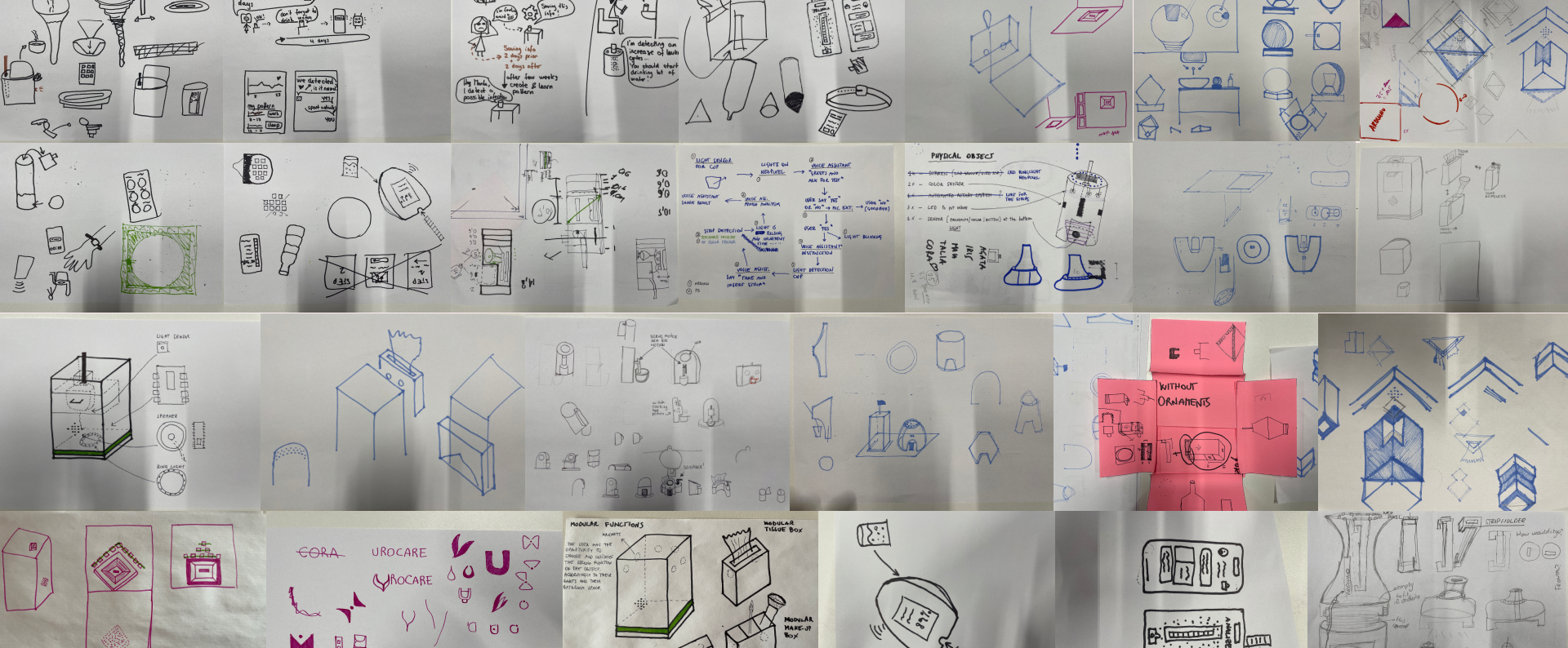
In the diverging phase to find a solution to our problem, we conducted a session of the Crazy’8s technique revisited in Crazy’4s to generate four solution sketches every 10 minutes. By doing so, we were able to categorize and group the most similar solutions together, and ultimately arrive at our final concept.
We began with a design that wasn't quite right and made multiple iterations until we achieved our final expectations and designs.

UroCare
UroCare is a smart product that integrates a digital voice assistant, urinary test analyzer, and app for active women who want to proactively manage chronic UTIs during their busy lives.
Concept
UroCare is a smart product that consists of a digital voice assistant, an at-home urinary test analyzer, and a connected app.
The voice assistant, named Cora, is specifically designed to help women with chronic UTIs by allowing them to perform at-home urinary tests to detect UTIs at an early stage. Cora utilizes advanced technology and algorithms to provide personalized and accurate insights into the user's health based on the results of their urine test.
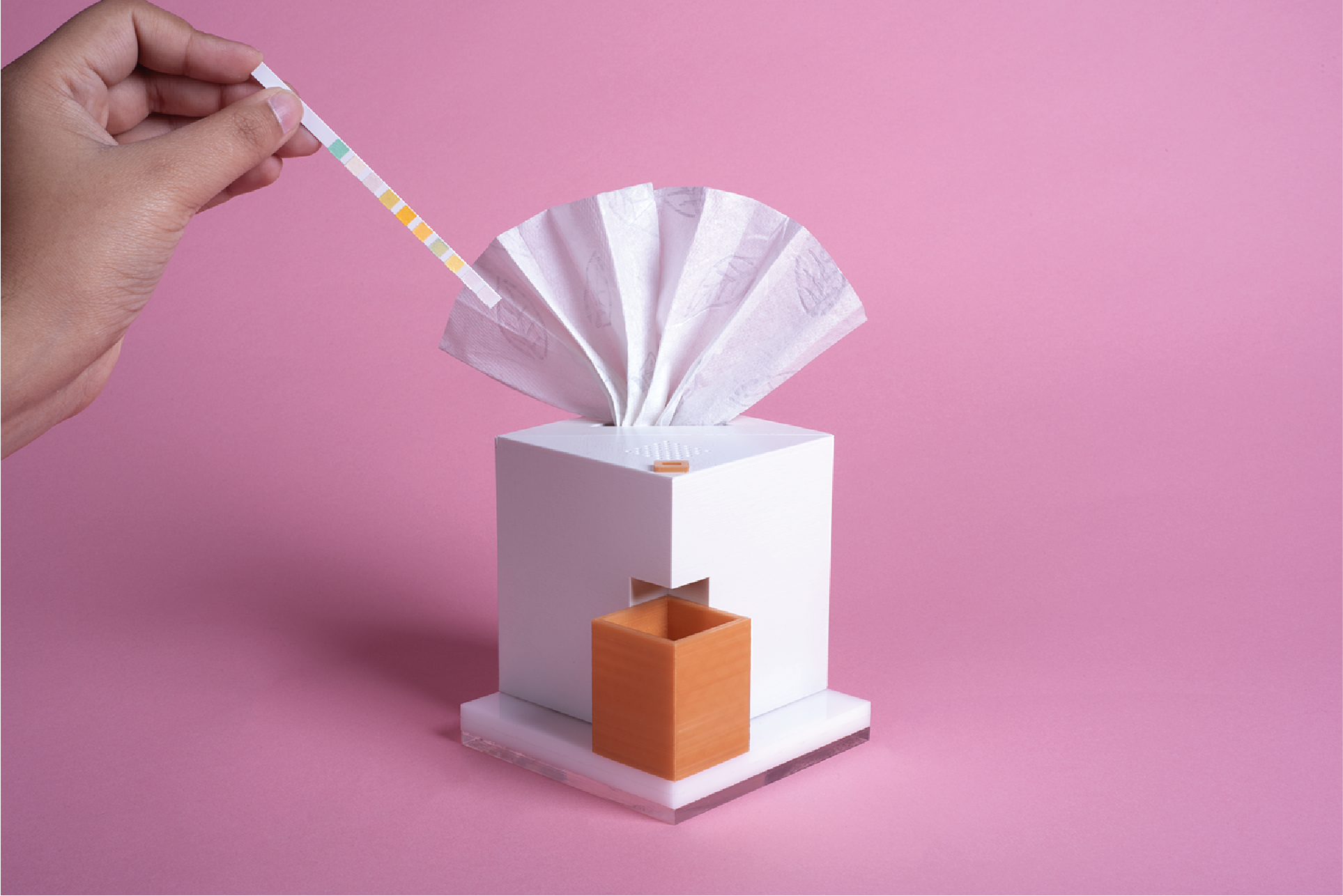
Using UroCare is simple and user-friendly. The user provides a urine sample in the cup provided, inserts the test strip in the indicated slot, and Cora analyzes the results. The connected app then provides detailed information on the user's health metrics such as hydration levels, pH balance, protein levels, and more. Additionally, the app allows users to ask Cora questions about their results or their health in general, and it provides personalized advice and recommendations based on the individual's needs.
The overall goal of UroCare is to make it easier and more convenient for users to monitor their health and take proactive steps towards maintaining their well-being. By providing a voice assistant for urine testing, UroCare enables users to detect UTIs at an early stage, avoid antibiotic overuse, and receive personalized insights into their health.
How does UroCare work?
With UroCare, the user flow is no longer solely on the user's side but shared with the voice assistant Cora (in yellow) and the app (in blue).
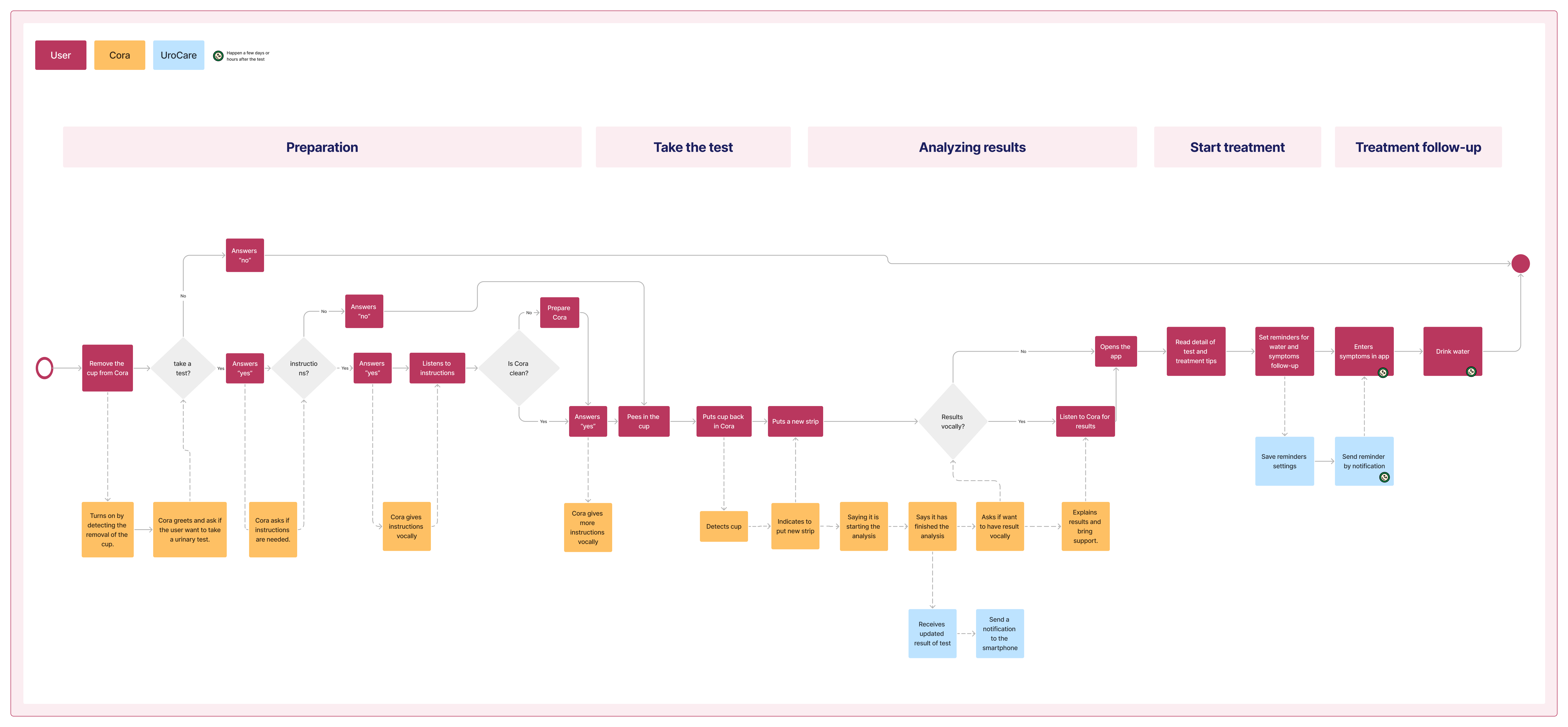
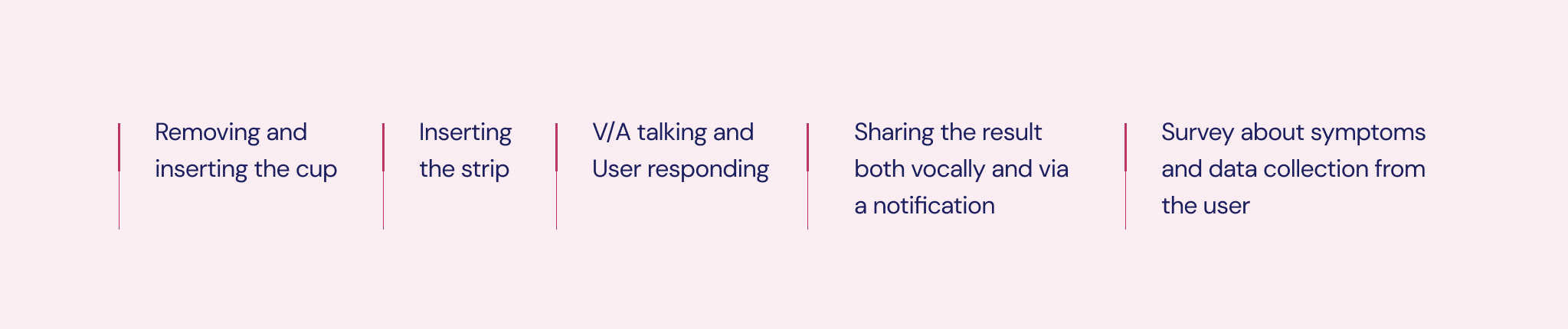
Compared to the test with the strips, in this flow, the user only has to follow the instructions of Cora, urinate and put the cup and a new strip in the device. After that, Cora will take care of the rest: manipulating the strip, timing the soaking and reading the results while the user is freed.
When Cora finishes the analysis, she informs Marta vocally but also sends the results to the application which sends a notification to Marta's phone. Marta is free to listen to the result or to look at the details of the result on the application. In the application she can also read treatment tips and set reminders to help her treat her infection. These reminders are customizable: she can set a reminder to drink water but also to take her antibiotics if prescribed.
In order to not make the voice assistant tedious and repetitive, especially since our target user is someone who has chronic UTIs and therefore will surely know the instructions through experience, we thought of letting the user skip the instructions. This skip function is also present when sharing the test result in case the user prefers to keep the results private.
The major interactions with UroCare can be synthesized as follows:
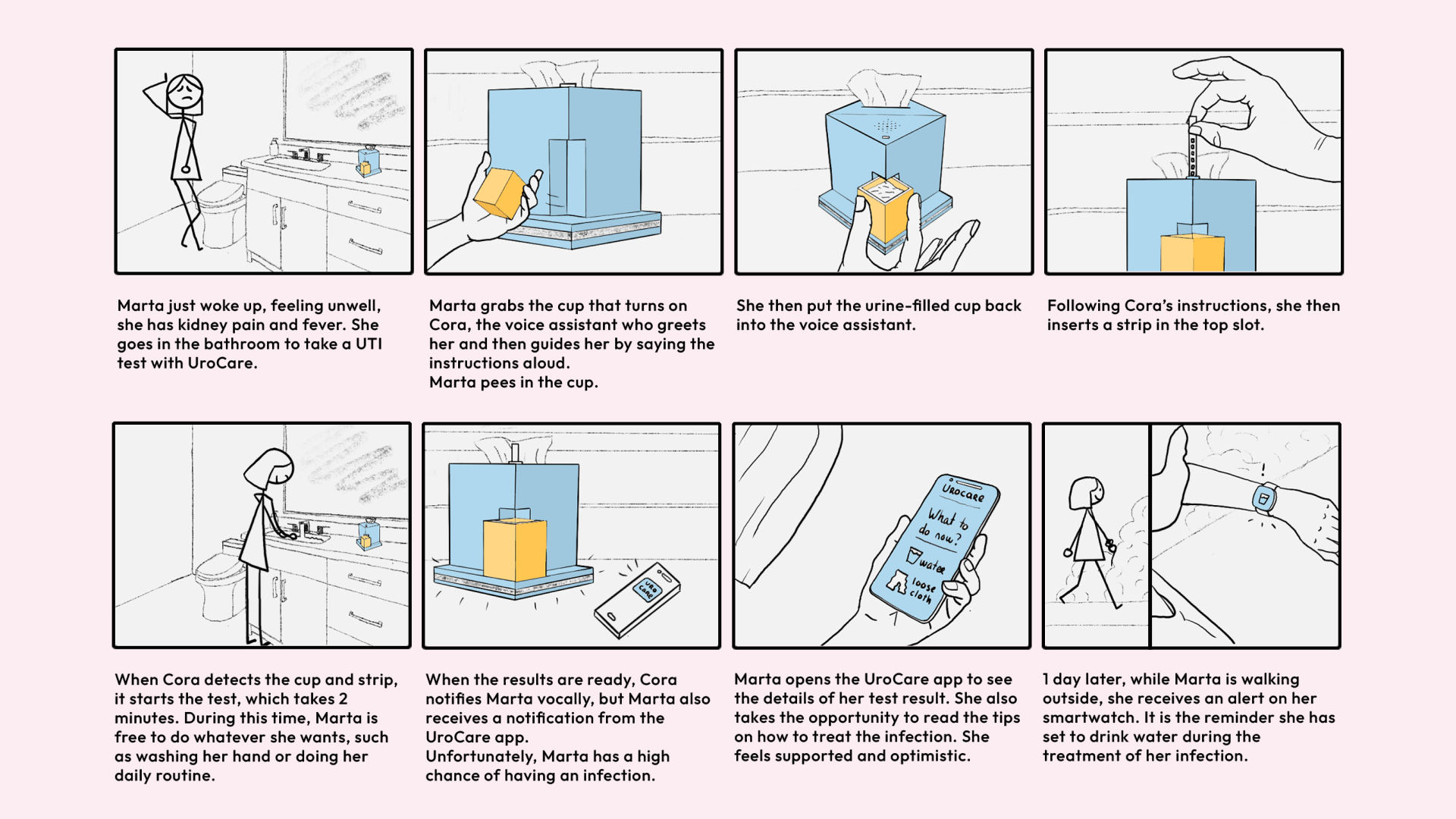
The following storyboard can further demonstrate the use of UroCare for our archetype Marta.
Uh-oh Marta is feeling unwell this morning…
Prototype
Brand & Identity

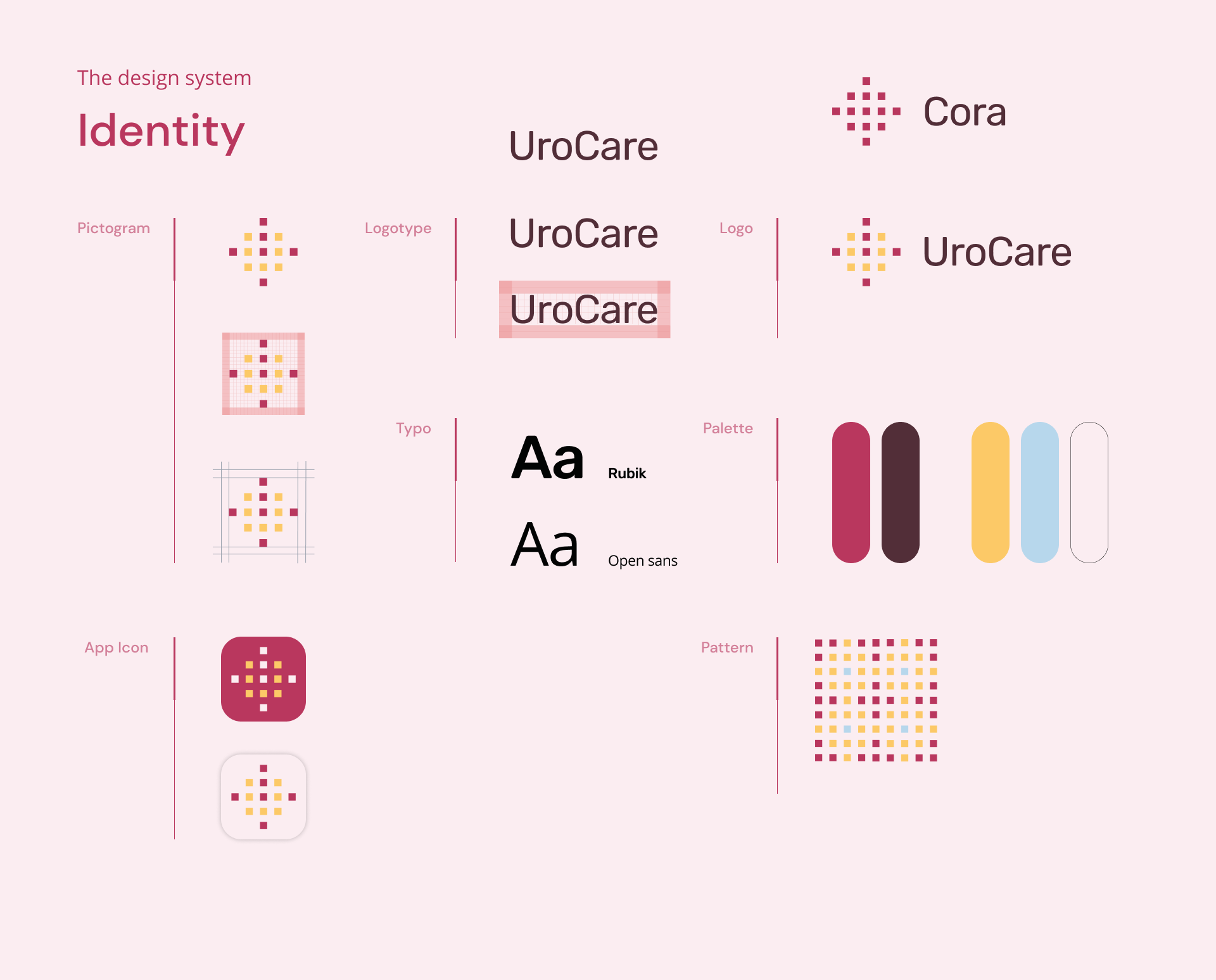
The first step in building the UroCare product was creating a design system to ensure effective and consistent communication. As the UTI phenomenon primarily affects women, the visual identity was designed to appeal to a feminine target audience, with magenta as the main color representing femininity, hope, well-being, creativity, and innovation. The secondary colors of yellow and light blue were chosen to complement magenta in a chromatic triad, with yellow as an accent color and light blue as a secondary color. The logo design takes inspiration from the shape of the standard stripes used for at-home strip testing, with vertical strips featuring tested metrics in a square shape with different colors. The monogram takes the shape of a diamond and resembles the letter "U" of UroCare. The logotype is simple UroCare lettering in Rubik Regular. A pattern based on the monogram and an animation of the voice assistant Cora were also created for a complete coordinated communication. The name UroCare was chosen to represent the link between urinary tests and self-care, while the name Cora was inspired by other popular voice assistants such as Alexa and Siri and was designed to be short, easy to pronounce, and memorable in all languages.
Mobile application
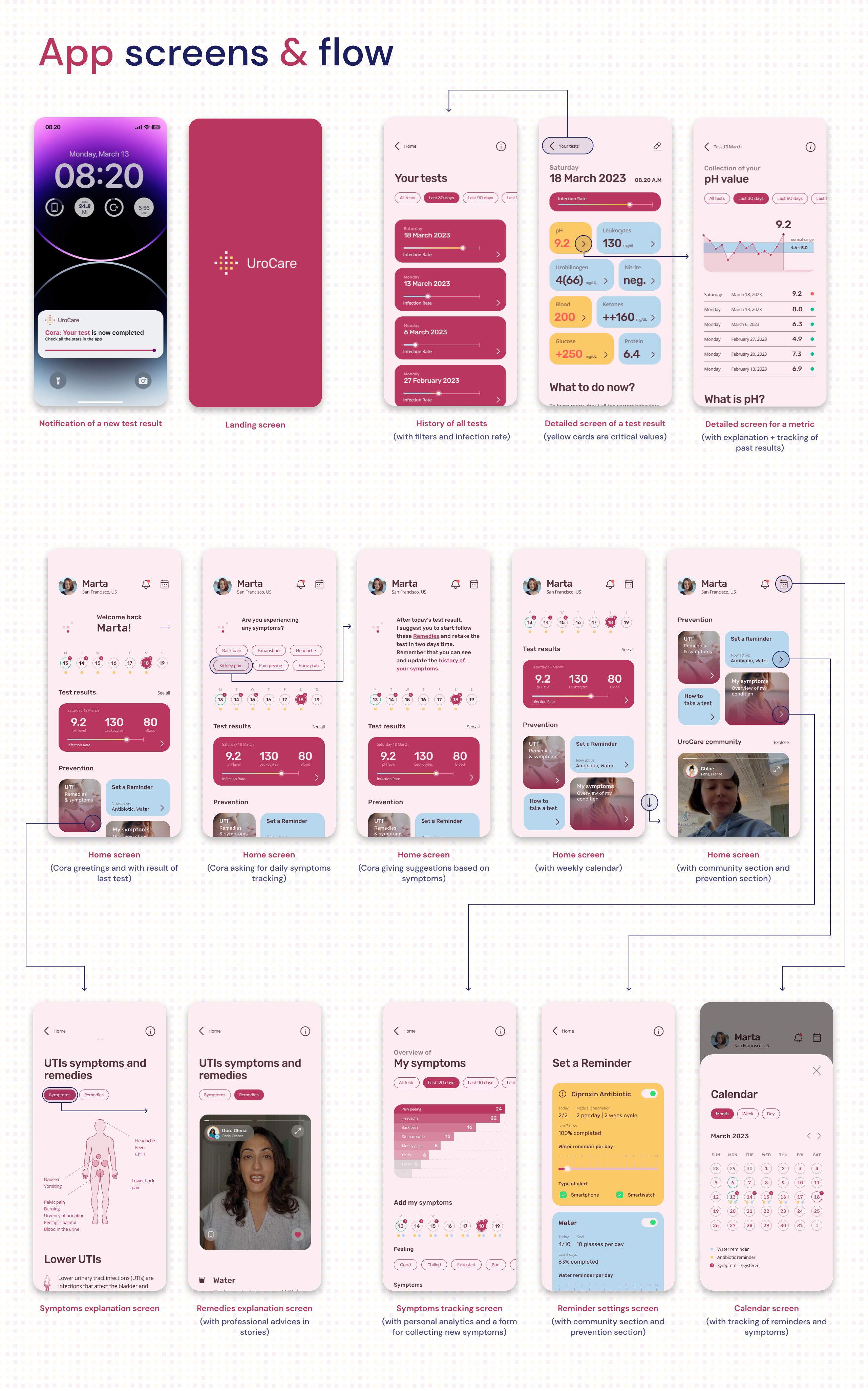
For the mobile application, we started by defining which features were the most important for our prototype:
- Show the detailed results of a test
- List advices and recommendations regarding UTIs treatment
- Setting-up custom reminders to drink water or take antibiotics
- Explain UTI and its symptoms
- Collect symptoms for tracking infections
Based on that, we did a sketch session on paper to brainstorm layout ideas.
After that, we started prototyping on Figma, starting with lo-fi screens and ending with an interactive high-fidelity prototype:
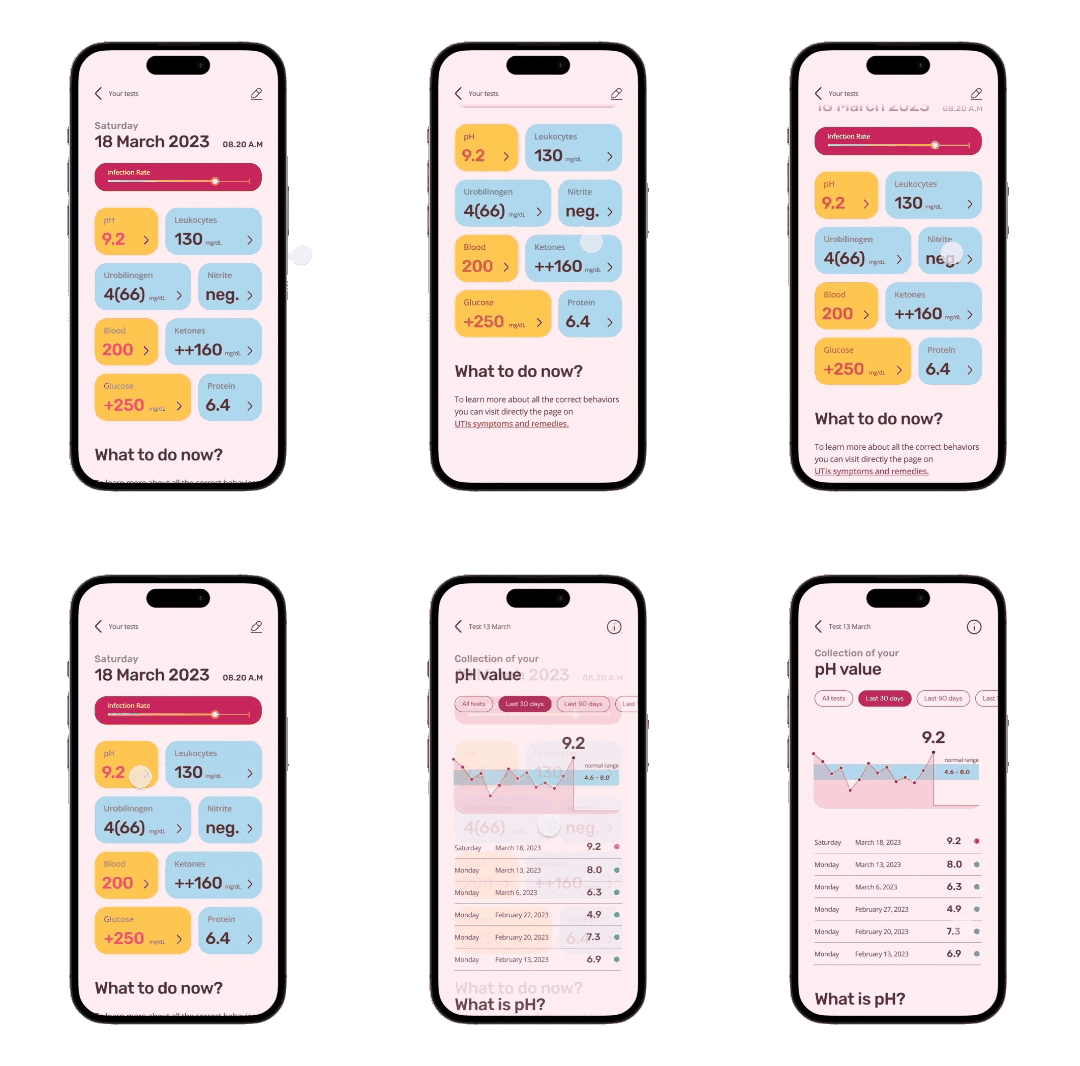
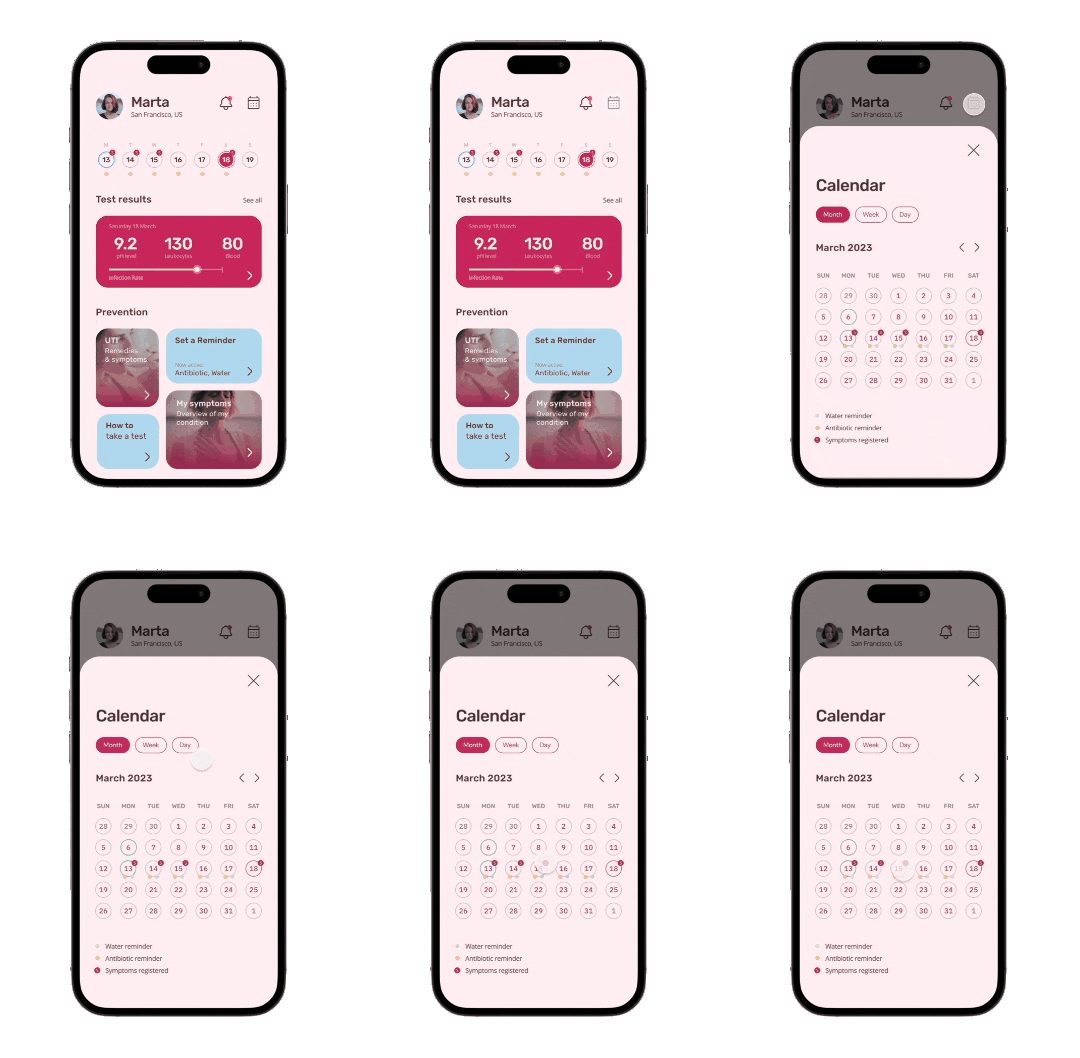
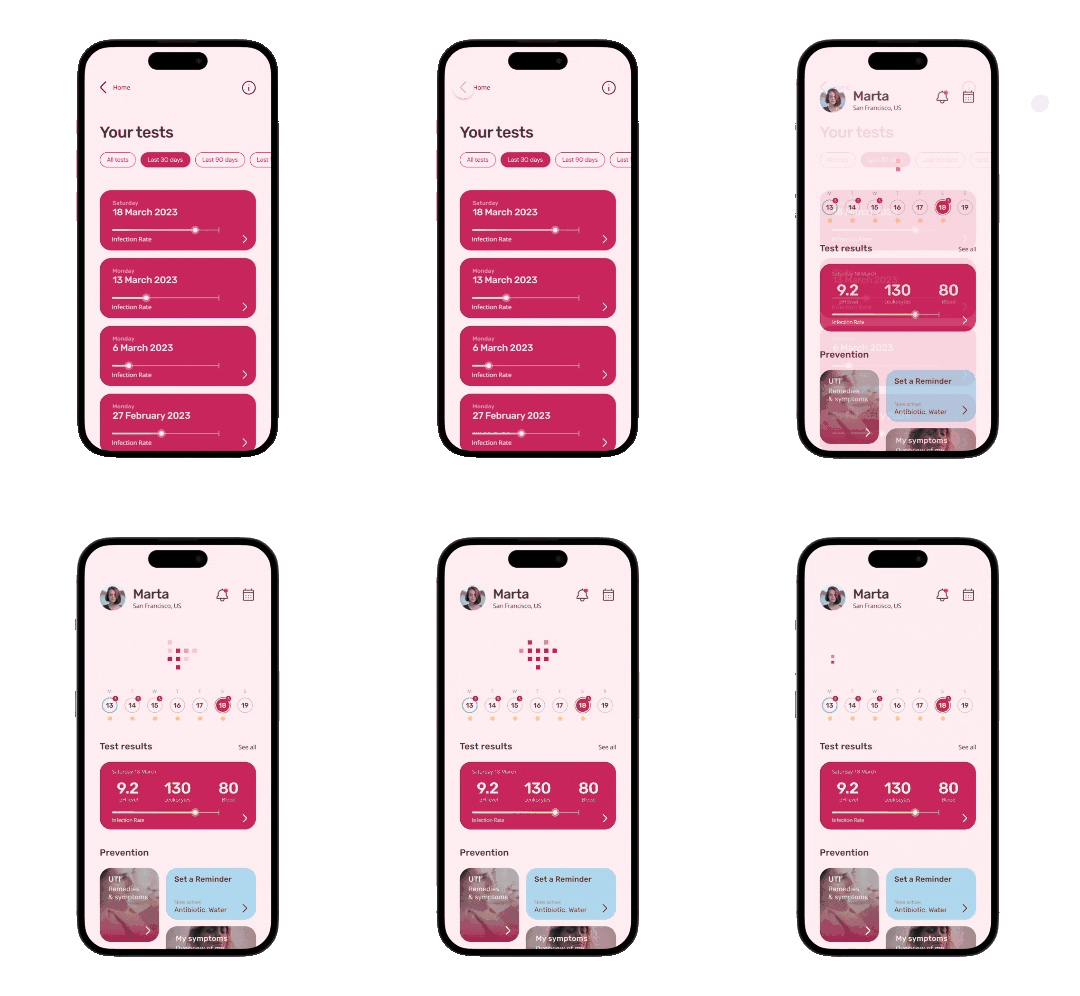
Vocal assistant (Cora)
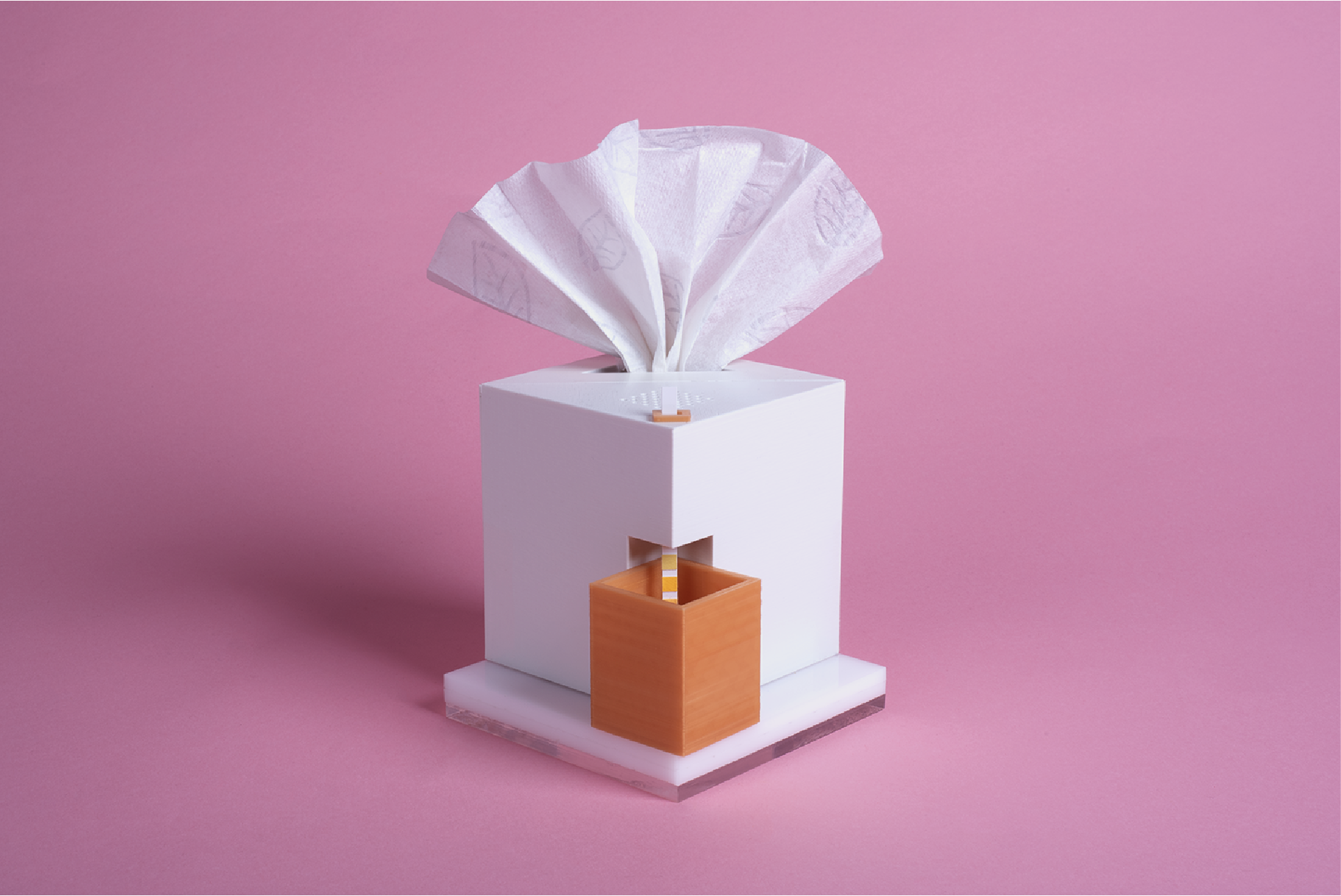
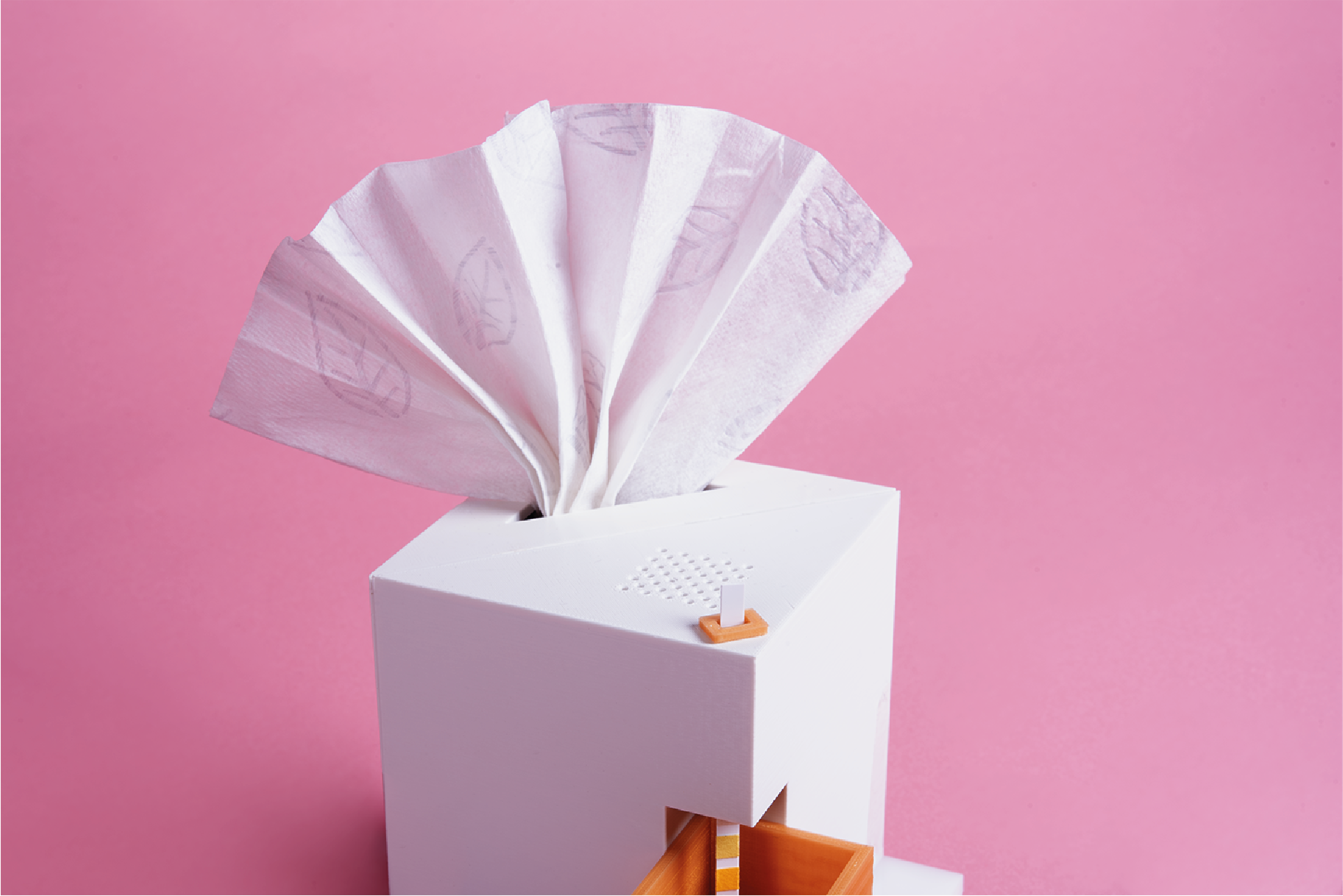
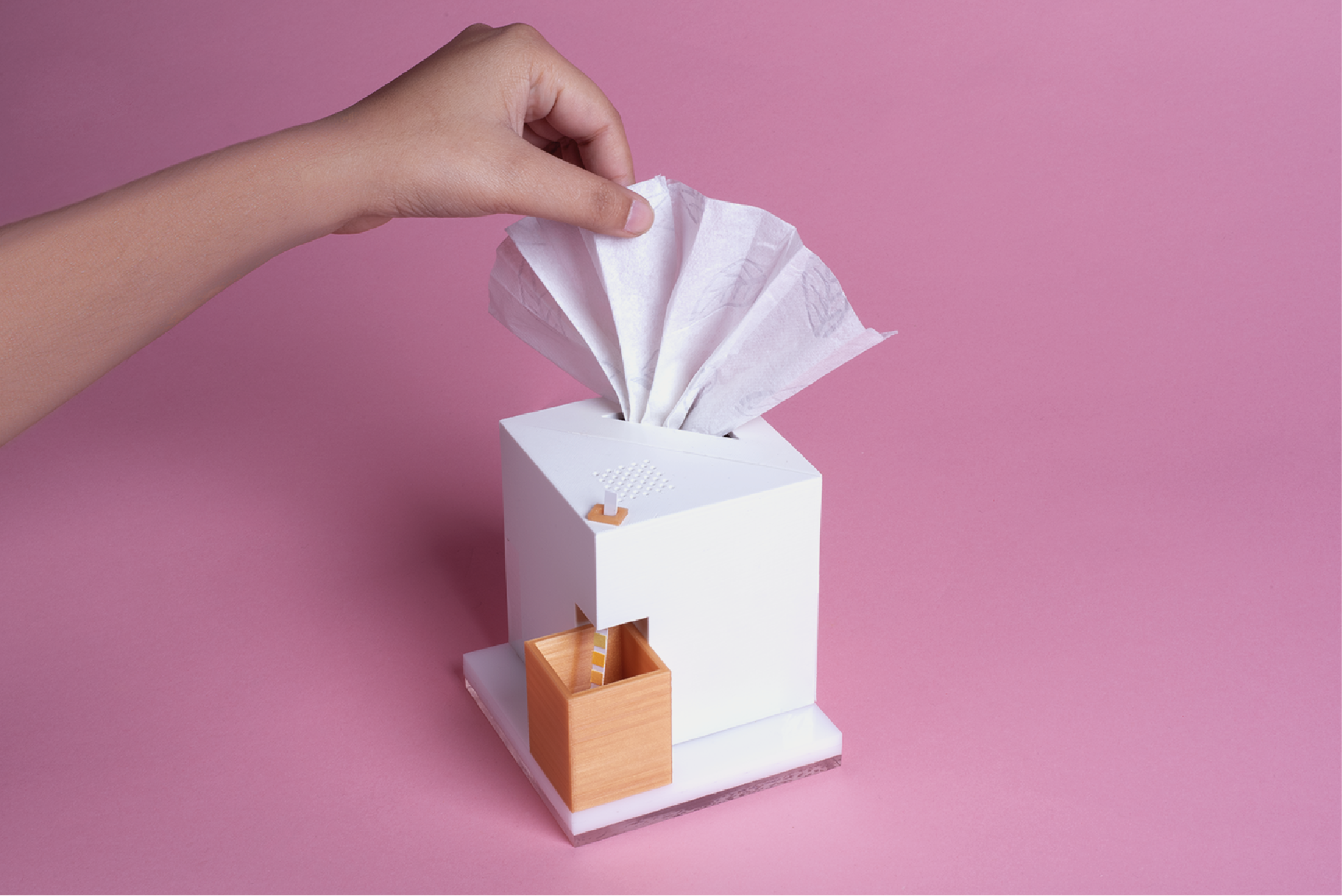
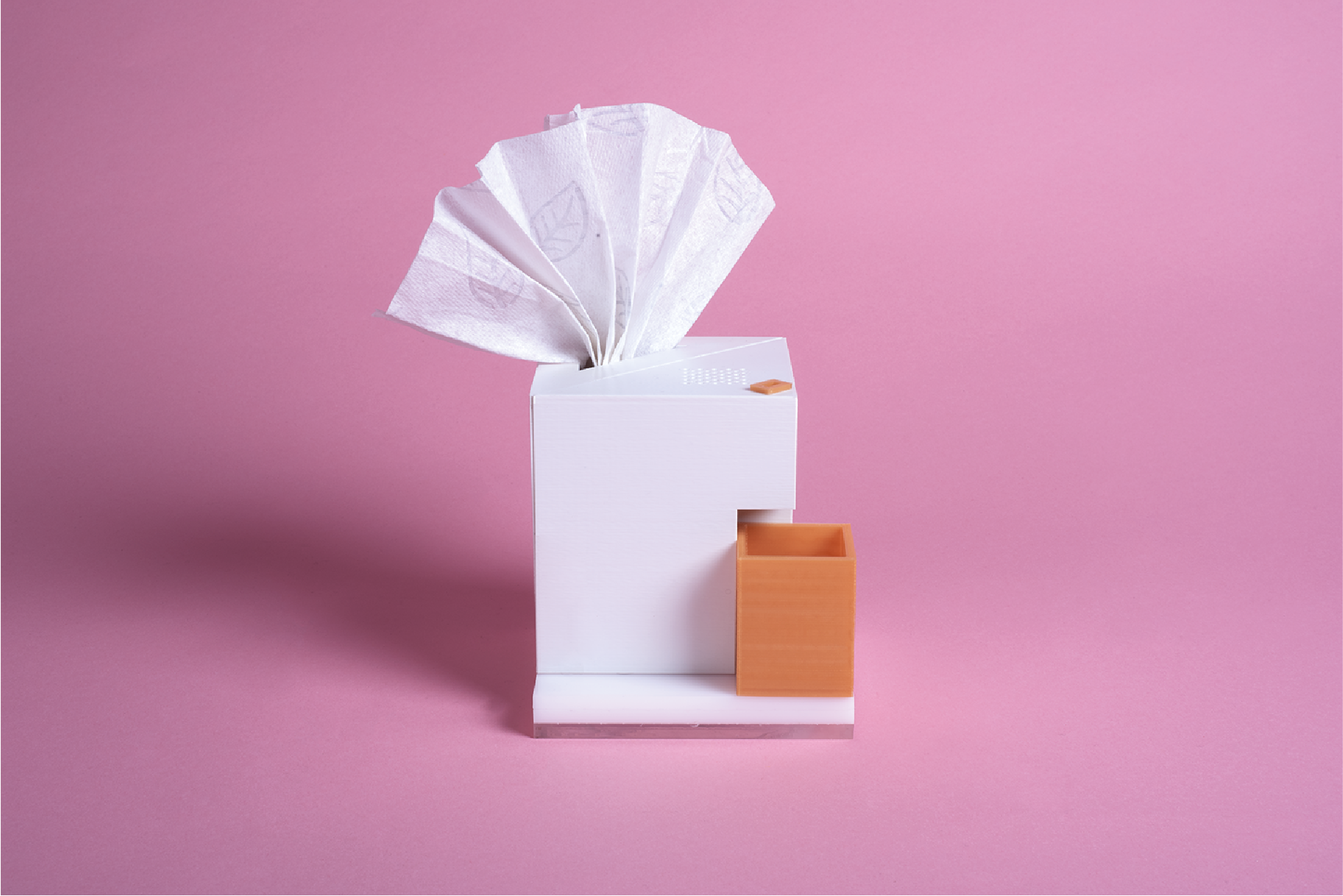
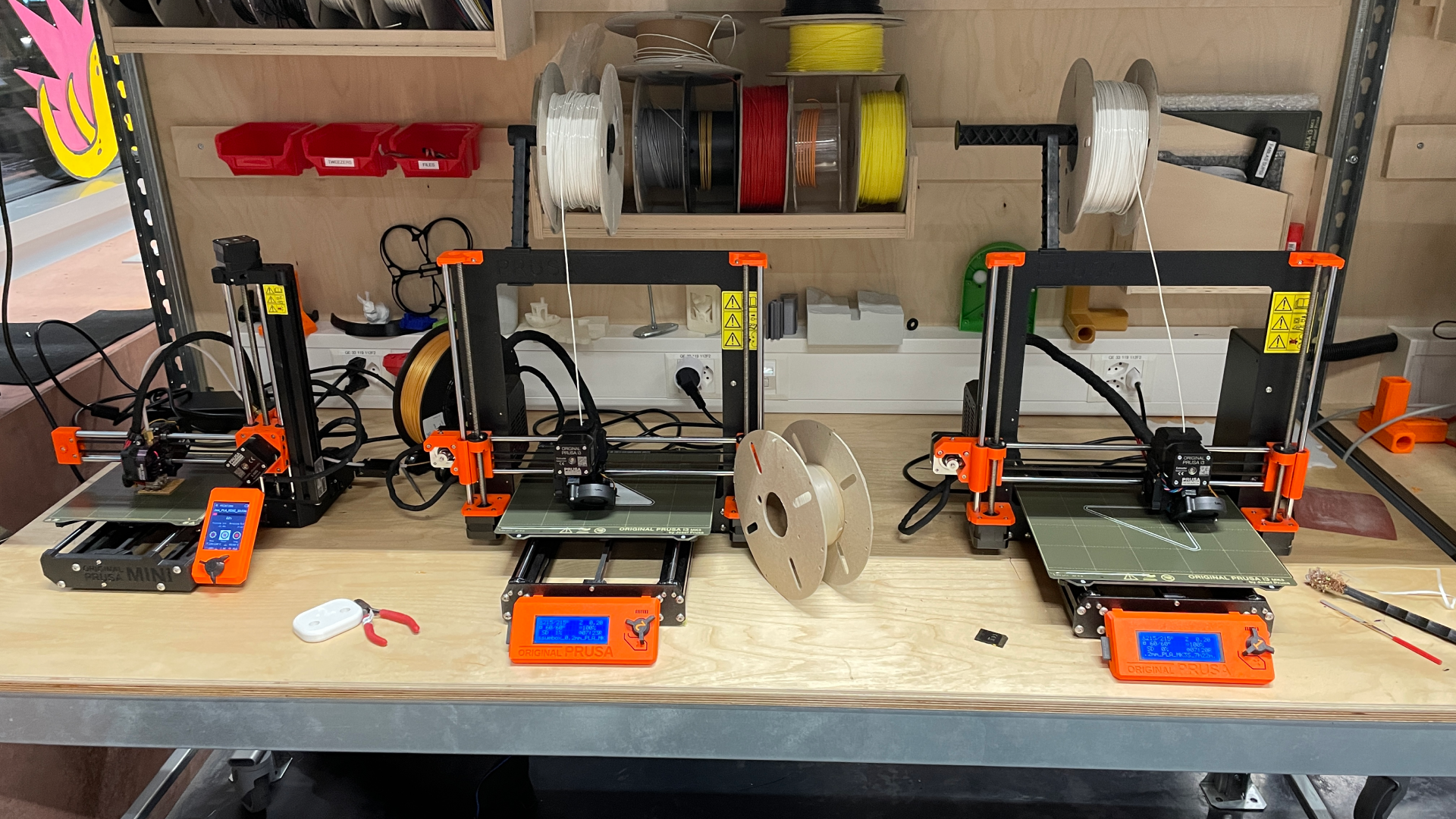
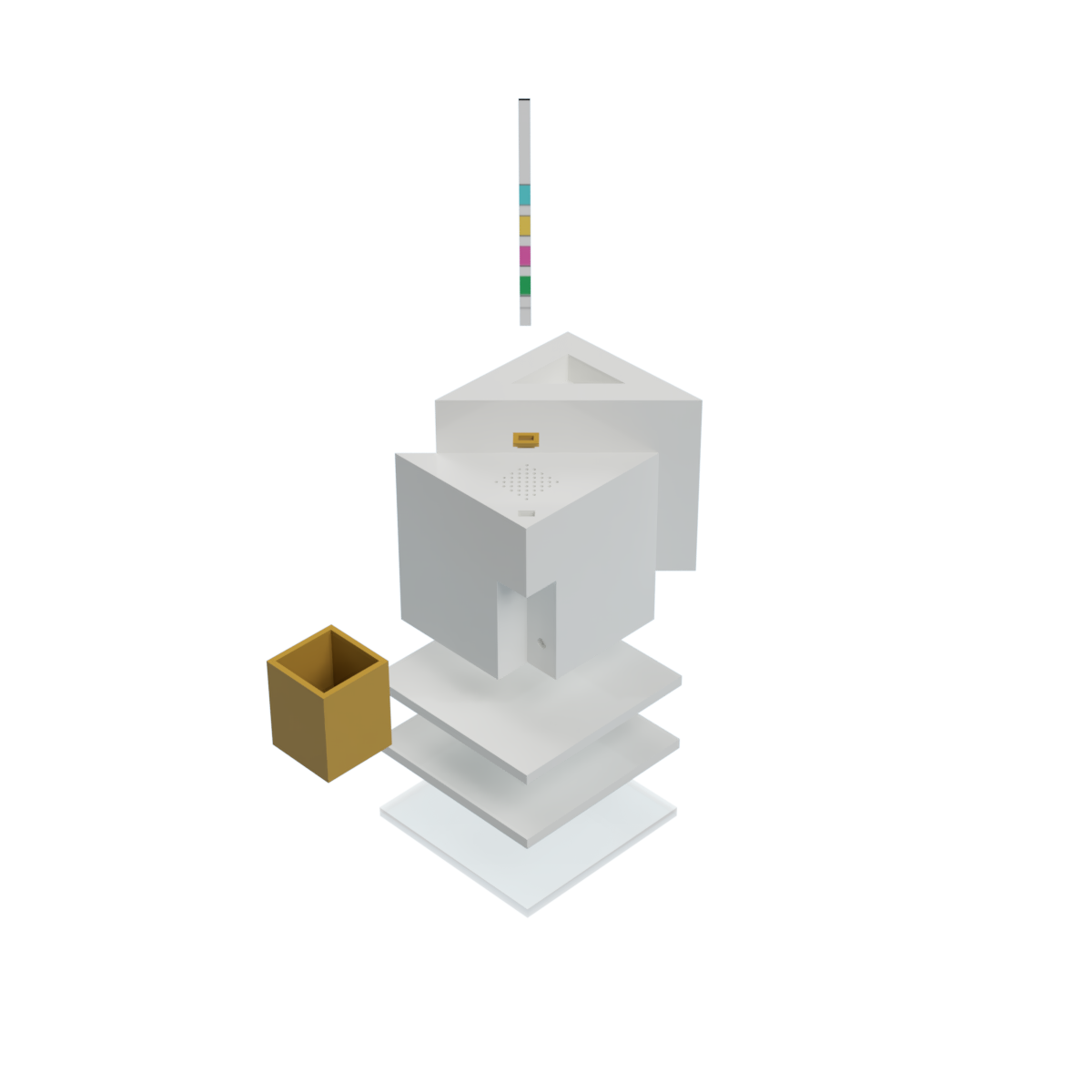
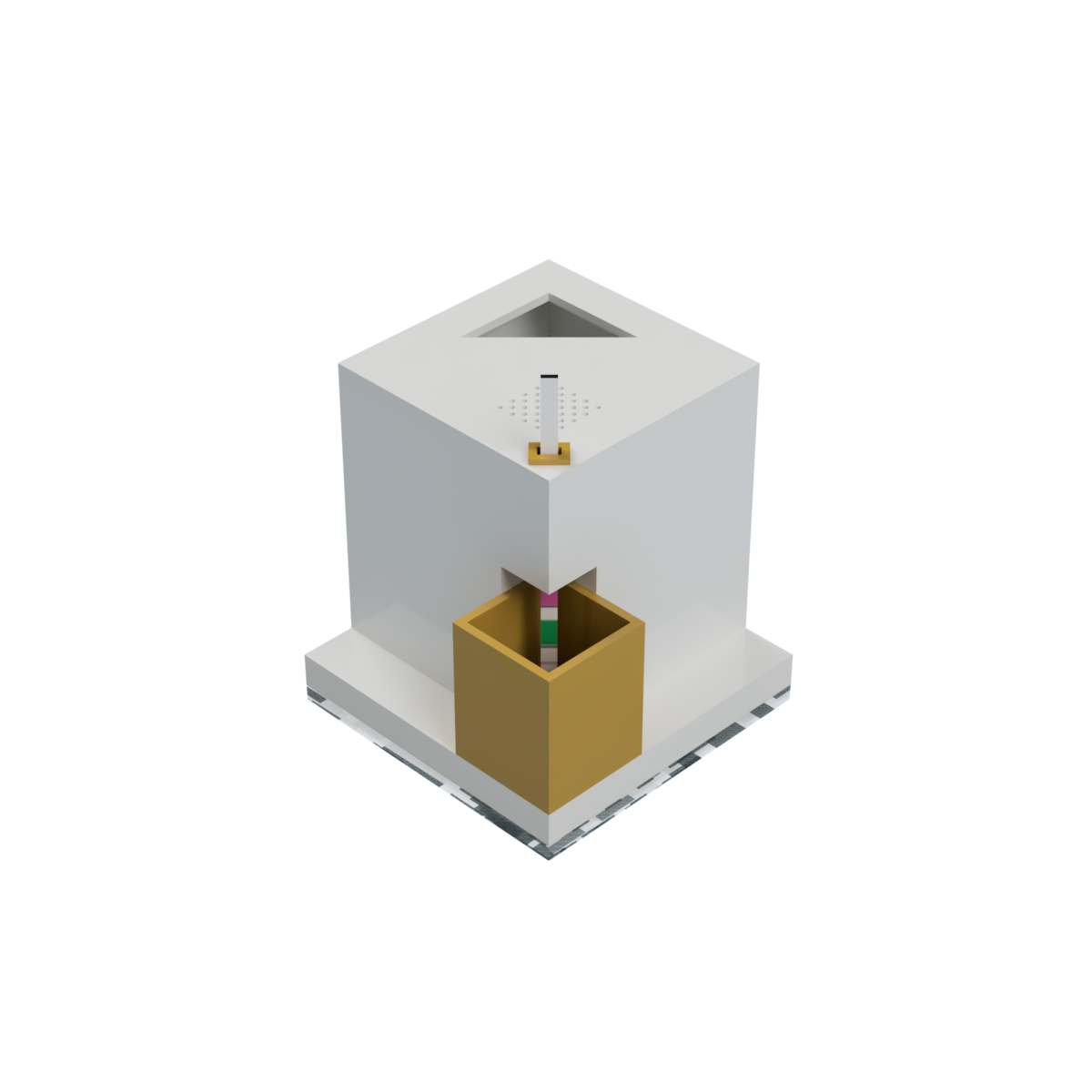
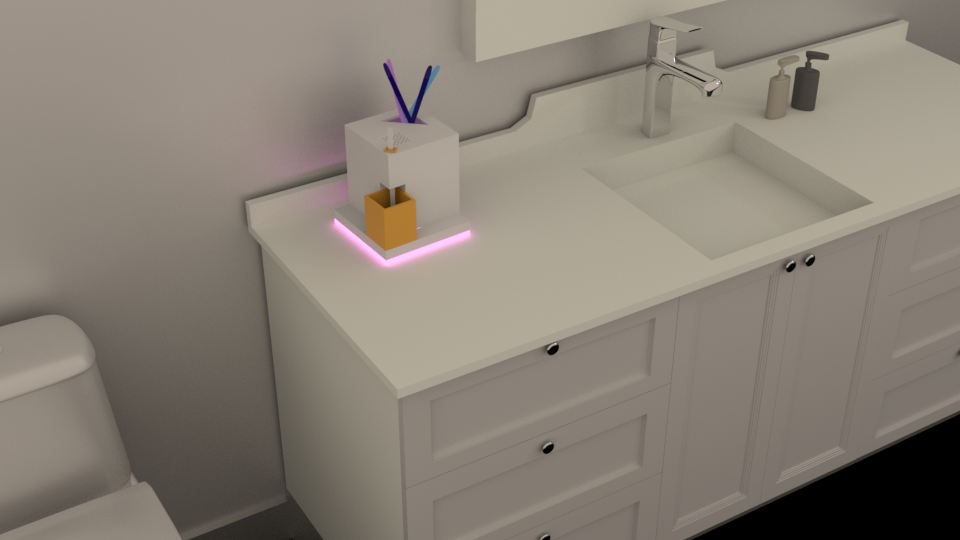
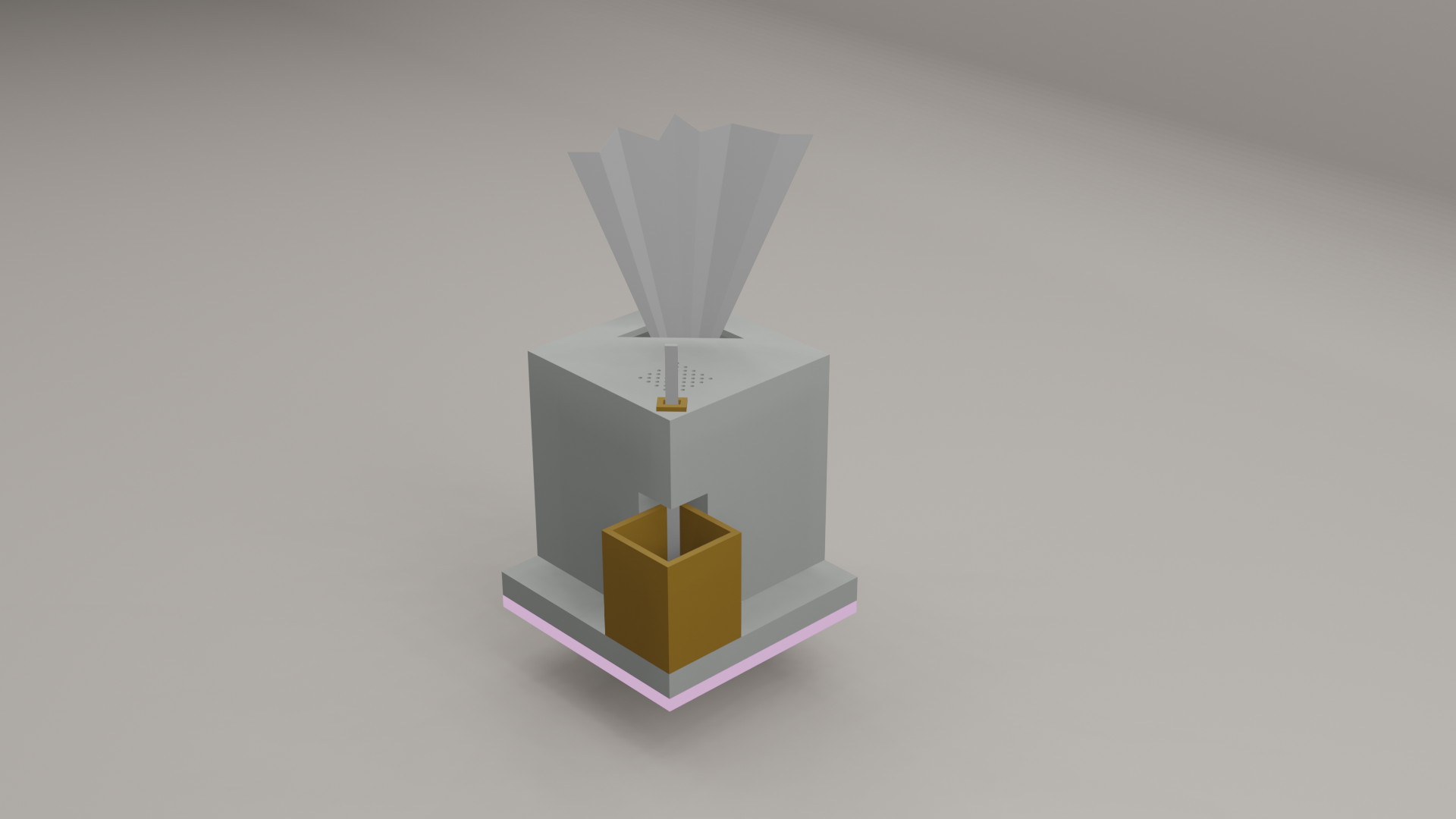
The design of the voice assistant for UroCare was a challenging task, as it needed to incorporate multiple functionalities such as collecting urine, fitting a strip, integrating electronics, lights, and speakers, while ensuring hygiene and affordance. Initially, the design team focused on a vertical solution with the cup at the bottom and the strip insertion on top. However, after three iterations of product design, they settled on a square-shaped device with a drawer-like cup system, which could be easily operated and was hygienic. The design also included a modular back part that could be used for customizable storage such as a tissue box, makeup storage, and soap dispenser. This final version of Cora was small, suitable for the bathroom, and had a distinct identity that resonated with the UroCare brand.
In designing Cora, we faced several challenges, such as incorporating the functionalities of collecting urine, fitting a strip, and integrating electronics while considering the hygiene of the procedure and the affordance of the object. We started with sketches and went through three design iterations before arriving at the current version. The final design includes a base with a feedback light, which also serves as a platform for the cup. Instead of fully inserting the cup into the assistant, we opted for partial insertion to simplify the manipulation. The square shape of the object divides its functionalities into two triangles: the analyzer and the modular part (tissue box, etc.). To blend Cora into a bathroom, we chose white as the color, with the elements requiring user action highlighted in another color to improve affordance. Finally, we carefully considered Cora's personality to ensure she is supportive and non-judgmental, with a positive tone of voice to reduce user stress.
Code & Hardware
This prototype involved the use of an Arduino board combined with the MaInD PCB (V1.0). The light is possible thanks to a Neopixel 24 Led Ring. Cora's responses are mp3 recordings that are stored in an SD module and played through the DFPlayer Mini.The detection of the cup is done with a light sensor, as the cup blocks the light when it is placed.
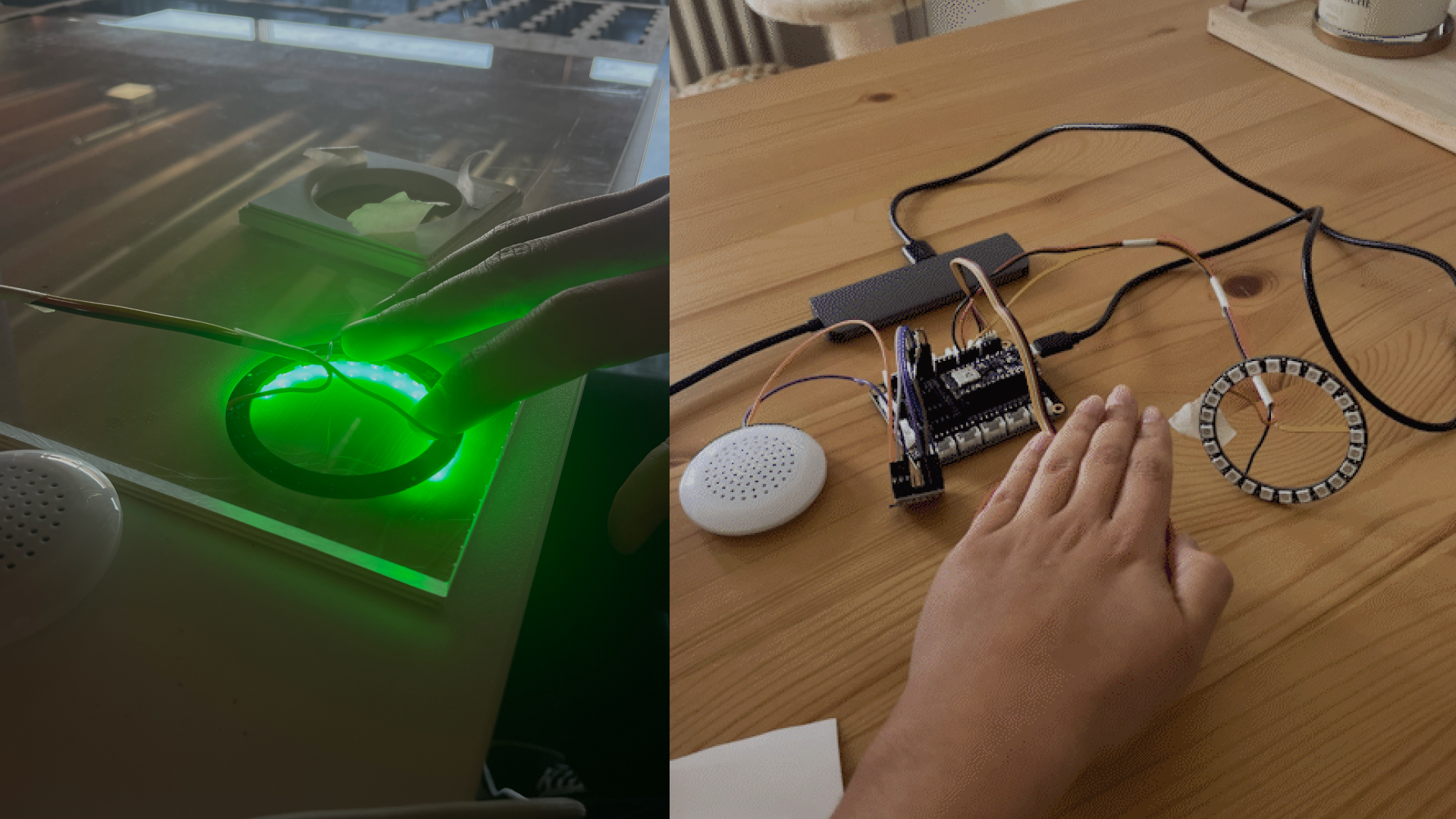
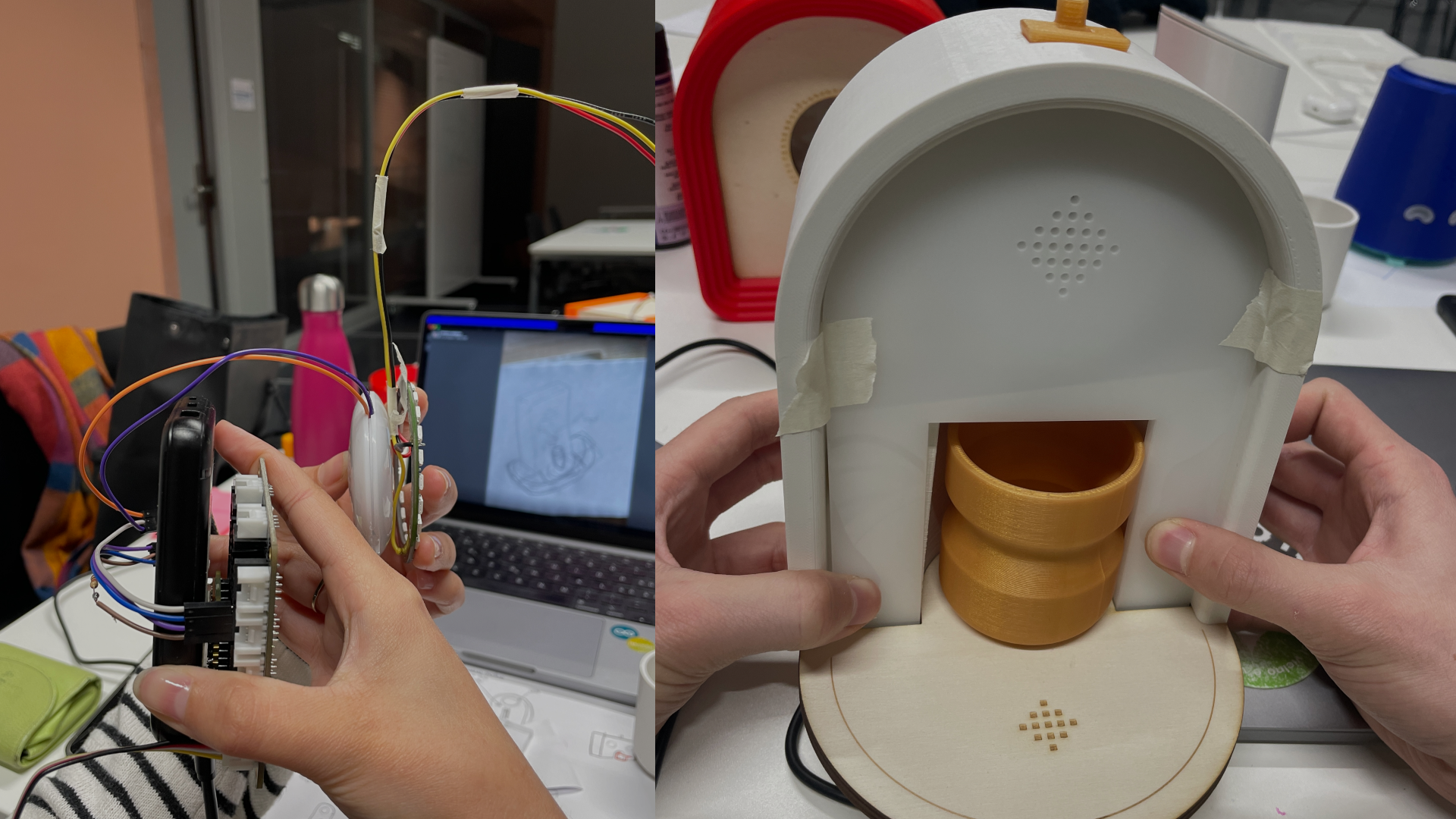
The voice recognition is implemented with PicoVoice AI voice models.
The conversation between Cora and the user is realized with a state machine pattern. Every answers from the user triggers a new state, which plays Cora’s answer and starts a new light animation.
Final renders of the prototype
Testing
As we spent a consequent time reworking the vocal assistant’s shape we didn’t have time to test our final solution. However, during the two first iterations we were able to gather informal opinions about the shape of Cora :
- The 1st shape (drawer concept) was said to be “weird to pee in a drawer”. A person also mentioned that it looked a bit prone to drop urine while opening and closing the drawer which would be disgusting.
- For the second shape the affordance was much more improved, testers would understand how it was supposed to be used. They however mentioned that without any explanation, they wouldn’t understand what this device would do. Some also mentioned that it is a bit weird the metaphor with the coffee machine since it is not coffee but urine we are handling.
Conclusion & next steps
The project presented several challenges related to the constraints and time allocated for its realization. However, the team believes that the solution of an automated urinary tester at home can be a real asset in the rapid detection of urinary tract infections, allowing people to have a better knowledge of their health status even before being in a critical state. The inclusion of a voice assistant may not seem relevant to the overall solution, but it could be a way to reach more people in the future, such as the elderly, disabled, or teenagers who are heavy users of voice assistants.
One of the biggest challenges was ensuring the hygiene and maintenance of the device, as it is crucial for its effectiveness. The team proposed making the parts that come in contact with urine removable and washable, but further collaboration with engineers and doctors would be necessary to determine the most suitable materials.
The engineering aspect of the project was also a challenge, as the team was focused on how to prototype the analysis and keep room inside Cora to include this engineering. However, after consulting with their mentor, they realized that they did not have the knowledge of the existing techniques to do this kind of analysis and that it was not necessary to design Cora with this in mind. Additionally, the team considered incorporating the storage of strips inside the voice assistant, as this would protect the strips from being contaminated easily and create a potential business opportunity.
Overall, the project was instructive, and the team believes that their solution has the potential to make a positive impact on people's health.
Next Steps
Collaborating with healthcare providers is indeed a crucial aspect when it comes to designing and developing healthcare products. Involving healthcare professionals early in the product development process can help ensure that the product meets the needs of the target users, is safe, accurate, and reliable. It can also help in identifying any potential regulatory hurdles or compliance issues that may arise.
In the case of chronic UTI patients, involving healthcare providers such as urologists and primary care physicians can be particularly important, as they have the necessary expertise to understand the underlying medical conditions and the challenges that patients face in managing their condition. Collaborating with them can help ensure that the product is designed with the specific needs of these patients in mind and that it can provide accurate and reliable results.
Additionally, involving healthcare providers in the product development process can help in building trust and credibility among the medical community, which can be instrumental in driving adoption of the product by patients. By working closely with healthcare providers, we can also identify opportunities for integrating the product with existing healthcare workflows and systems, which can further enhance its usability and effectiveness.
Overall, involving healthcare providers in the product design and development process can be a win-win for both patients and the healthcare industry. It can help ensure that the product meets the needs of the target users, is safe, reliable, and accurate, and can be integrated seamlessly into existing healthcare workflows and systems.
UroCare is a revolutionary project that aims to address a common yet often overlooked health issue affecting women worldwide. Chronic UTIs can be a significant source of discomfort and frustration, and many women struggle to find effective solutions to manage their symptoms. That's why we created UroCare. By leveraging cutting-edge technology, including a digital voice assistant, urinary test analyzer, and app, UroCare offers a personalized approach to UTI management. The project's development process involved a rigorous and iterative approach, from user research to prototyping and testing. The result is a user-friendly, effective, and empowering tool that provides women with valuable insights into their health. The UroCare project is an excellent example of the power of technology to improve people's lives and has exciting potential for further development and expansion.