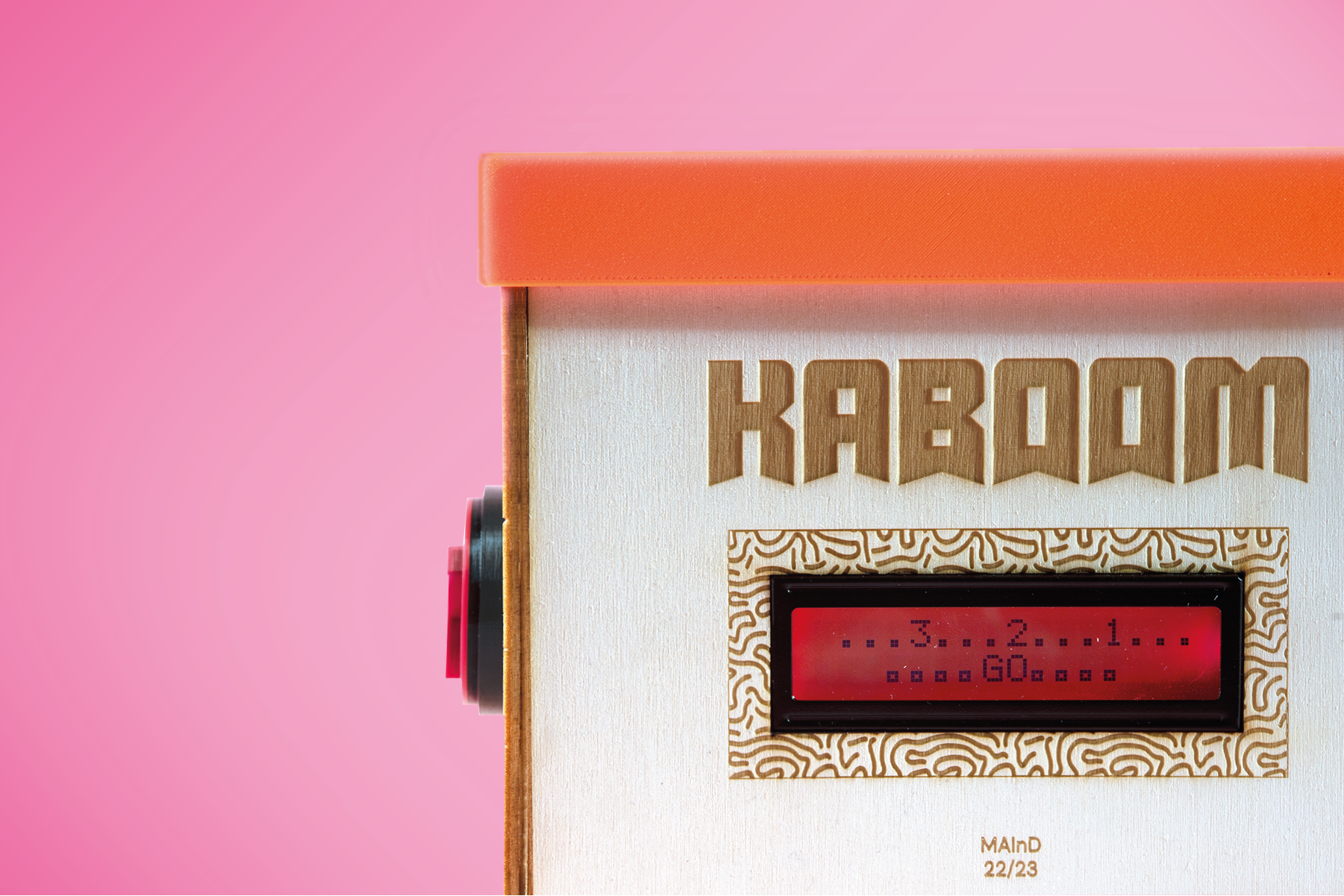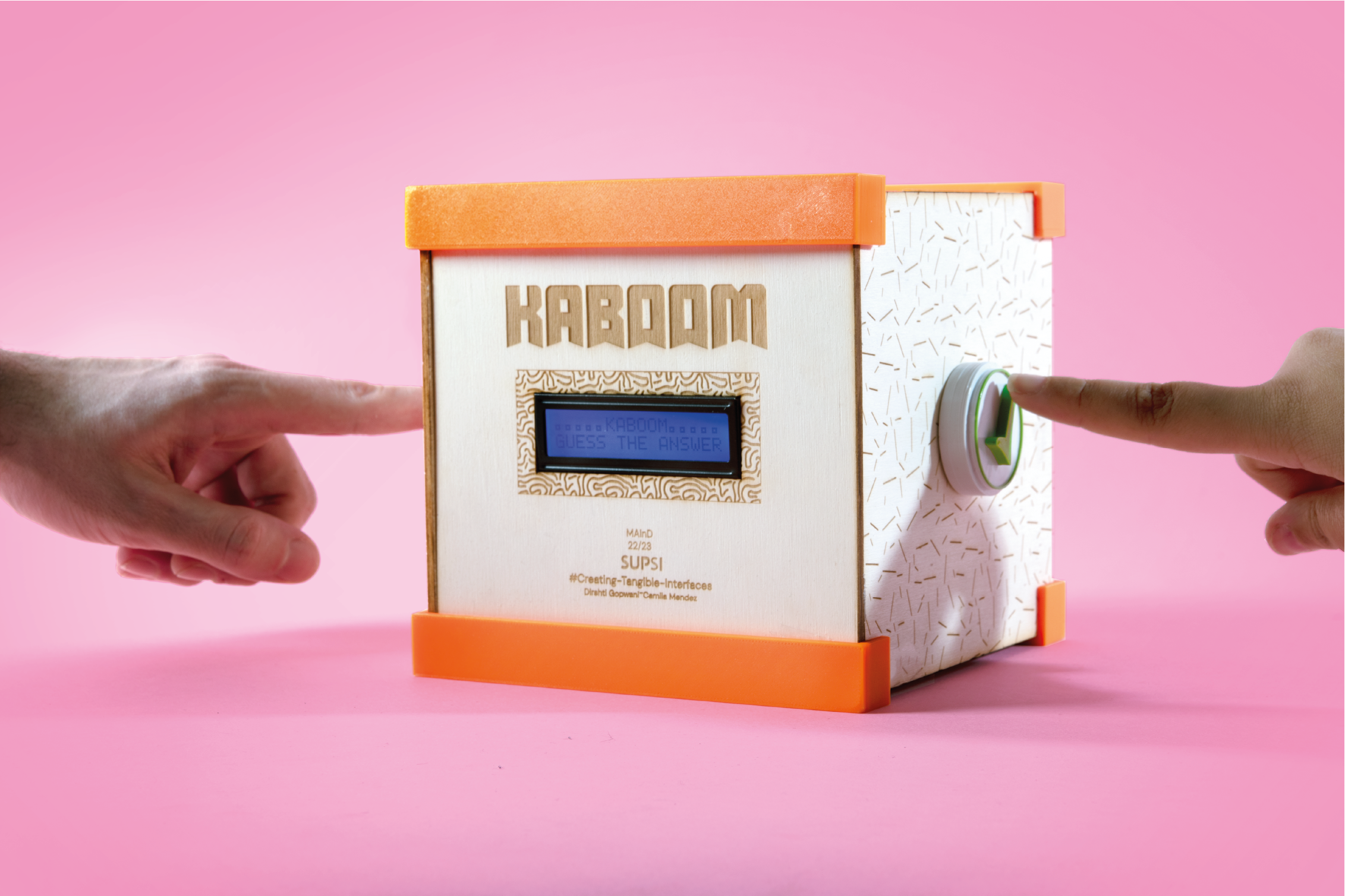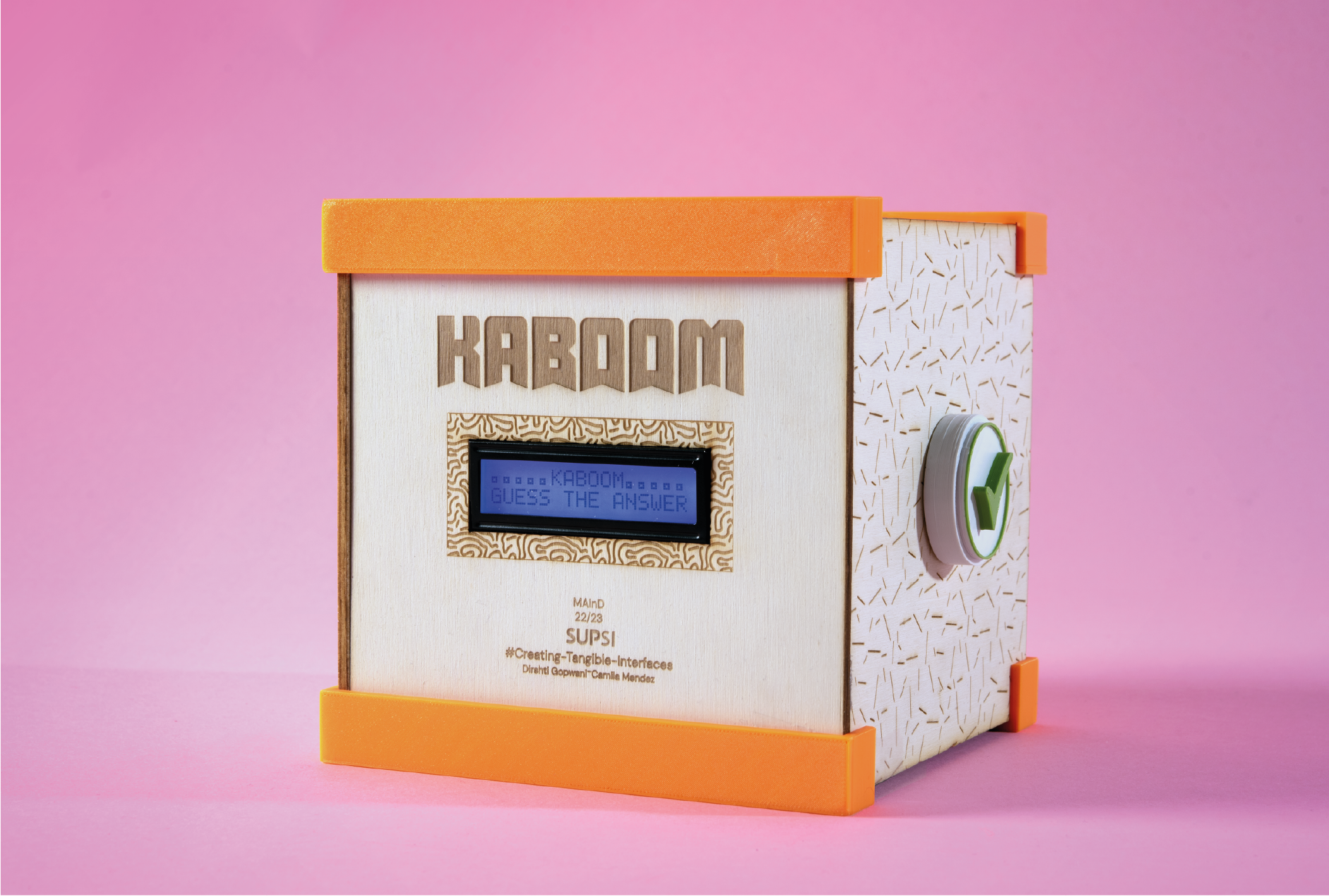
Kaboom is a tangible game that comes in a box with an LCD screen on the top that displays instructions and questions. There are True and False buttons on the side that the user interacts with. The device has a neopixel ring on one side that displays the time left in the game and green and red LED lights that indicate correct or incorrect answers. Finally, there is a buzzer that alerts players if a question is answered incorrectly and starts a new round of the game.
Kaboom is a game that tests players' general knowledge through a series of true or false questions displayed on an LCD screen. To start the game, the user activates the device by pressing the side buttons, and the game begins. The device features a neopixel ring that displays the remaining time, green and red LED lights that indicate whether answers are correct or incorrect, and a buzzer that sounds if the player answers a question incorrectly or if the countdown timer expires. Players continue answering questions until they lose or "explode." At that point, the game starts a new session or round.
Throughout our experience with Kaboom, we acquired a plethora of knowledge. Initially, we familiarized ourselves with the challenges of coding in MicroPython, which is a relatively new and intricate programming language. Moreover, integrating MicroPython with Arduino posed its own set of obstacles. We also had to determine the specific Grove components necessary to successfully implement our project. Programming Arduino to cater to our specific requirements was a complex task, but we were fortunate to have a knowledgeable mentor who possesses extensive expertise with Arduino. Consequently, we were able to create customizable components that were tailored to our project's needs.
Electronics
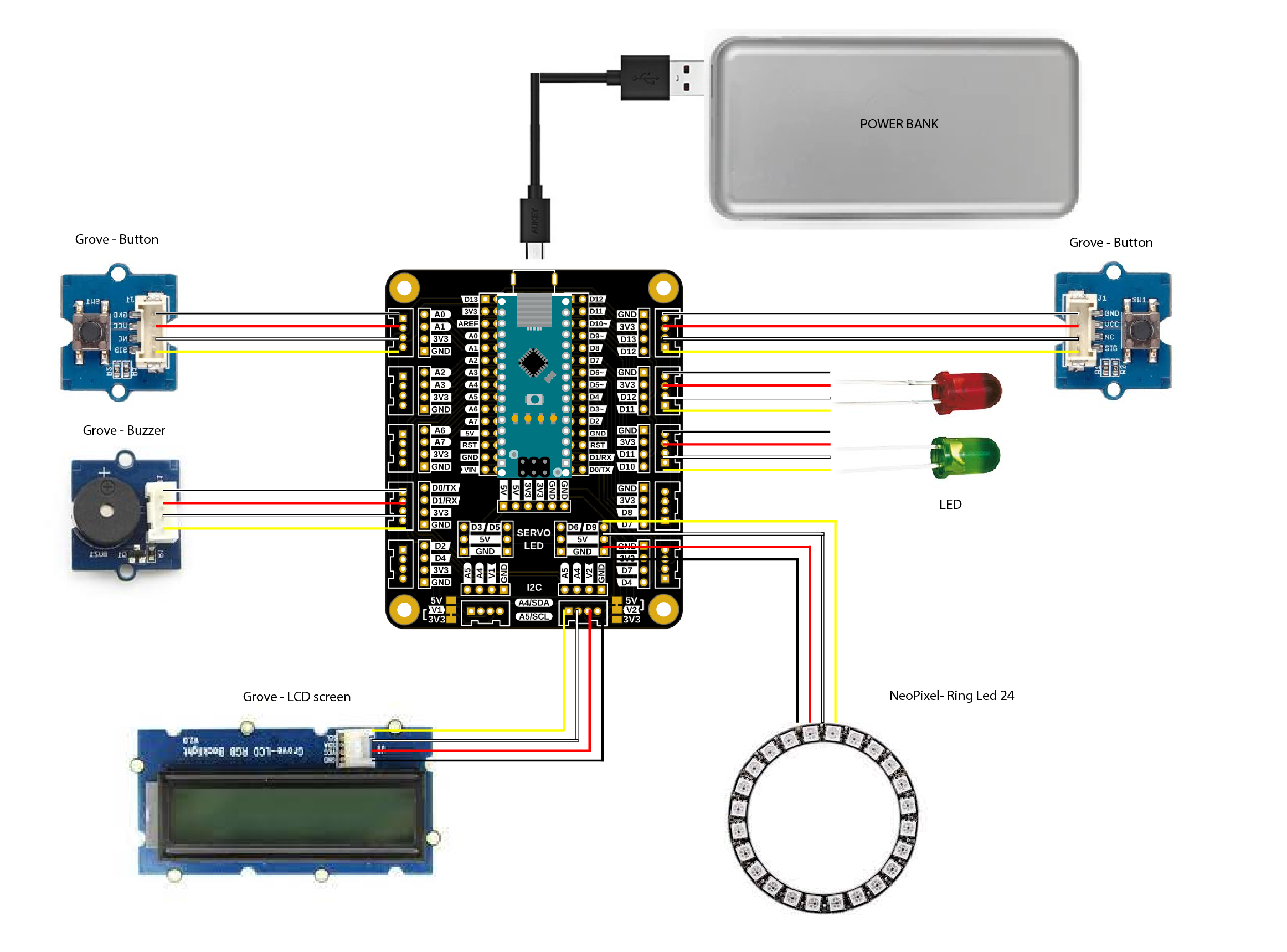
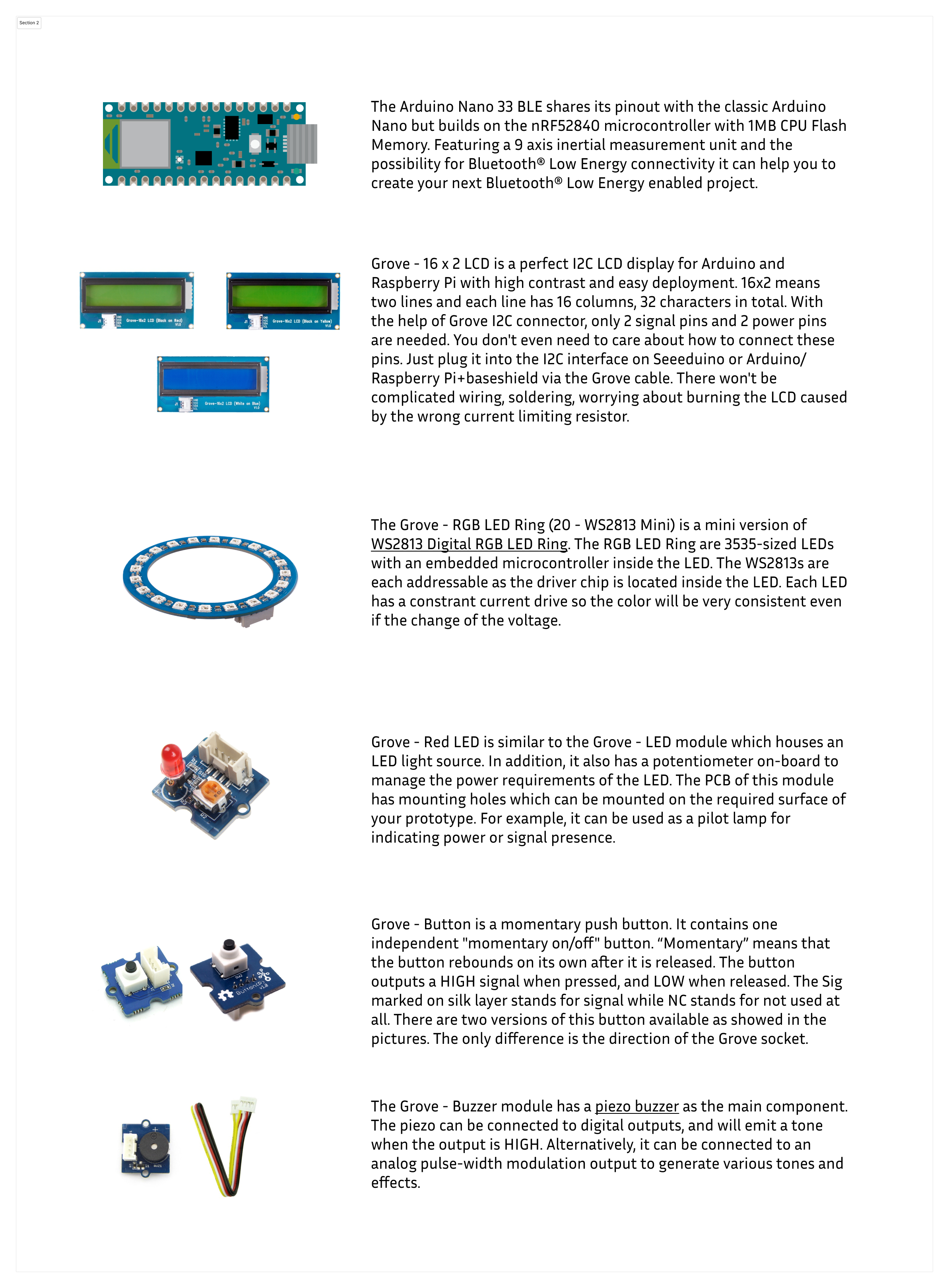
These are the components which were used during the making of the game:
These are the connections: